


What are the types of diners? The word “diner” has two meanings, and this guide answers both in detail.
As a person, a diner is anyone who eats at your restaurant. There are 12 common types, from the Gen Z diner and the solo diner to the regular and the picky eater.
As a place, a diner is a casual, low-priced eatery. This guide covers 11 well-known types around the world, from the American diner to India’s darshini.
For each person type, you will find how to spot and serve them. For each place, you will find the one idea an Indian outlet can borrow.
Key Takeaways
- Diners as people: there are 12 common types, and each needs something different from your staff and kitchen.
- Newer types, like the Gen Z, solo, protein-seeking and scan-and-pay diner, need single portions, extra-protein options and QR payments.
- Allergies are a safety matter, not fussiness; FSSAI rules require allergens on menus.
- Diners as places: 11 everyday eateries each offer one idea to borrow, from Hong Kong’s milk tea to the darshini’s pay-first counter.
What Is a Diner? The Two Meanings of Types of Diners
The word “diner” means either a guest who eats at a restaurant, or a casual eatery itself. Which one a reader means changes what “types of diners” covers.
A diner as a person. A diner is a guest who eats a meal at your restaurant. In this sense, types of diners are the kinds of guests you serve, grouped by how they order, eat and pay. The next section covers 12 of them.
A diner as a place. A diner is also a casual, low-priced eatery where people come back often, like the American diner with its counter and coffee. In this sense, types of diners are the everyday eateries of different countries. The section after the personalities covers 11 of them.
Types of Diners as People: 12 Personalities
Most restaurants meet these 12 types of diners. The first four are newer types that have grown in recent years; the other eight are familiar to most restaurants. Each one needs something slightly different from your staff and your kitchen.
1. The Gen Z diner
Gen Z diners are today’s teenagers and young adults. Eating out has become a mainstream habit for Gen Z and millennials in smaller Indian cities. That is the finding of a September 2025 Grant Thornton Bharat report, made with the National Restaurant Association of India (NRAI).
How to spot them: they come in groups after college or work, and often ask for a dish they saw online.
How to serve them: make sure that dish looks the way it did online, and keep a few combos at student prices. A short menu that is easy to read on a phone helps too.
2. The solo diner
The solo diner eats alone, often at lunch, and makes up a growing share of quick service orders. Solo orders made up 47% of quick service dining occasions in 2025, up from 31% in 2021, according to Yum! Brands’ 2026 trends report.
How to spot them: one person at the door, often with a phone in hand.
How to serve them: keep a counter or two-seat tables, and single portions on the menu. Seat them as readily as a group, and do not rush them.
3. The protein-seeking diner
This diner checks how much protein a dish has. Protein has become a selling point in India. Searches for protein snacks hit five-year highs in 2025, Reuters reported in August 2025. The same report says the government estimates 73% of Indians are protein-deficient.
How to spot them: they ask for extra paneer, egg or chicken, or which dish is the most filling.
How to serve them: mark the dishes rich in protein on the menu. Offer add-ons, such as an extra egg or more paneer, at a fixed price.
4. The scan-and-pay diner
This diner pays by scanning a QR code with UPI and rarely carries cash. UPI processed 24.07 billion transactions in September 2026, according to National Payments Corporation of India (NPCI) data reported by Outlook Money.
How to spot them: they take out their phone as soon as they ask for the bill.
How to serve them: keep a QR code at every table or the counter. Check that each payment has come through before the guest leaves.
5. The picky eater
The picky eater changes the dish: less salt, extra spice, sauce on the side.
How to spot them: a long list of changes on a single item. Ask whether a change is a preference or a rule, such as an allergy.
How to serve them: write every change on the kitchen order ticket (KOT), not in a server’s memory. When the change reaches the kitchen in writing, the dish is less likely to come back.
6. The diner with an allergy or a diet rule
This diner looks like a picky eater but is not one. A nut allergy, a gluten problem or a Jain diet with no onion or garlic is a rule, not a preference.
FSSAI’s labelling and display rules require restaurants to declare allergens on their menus. The listed allergens include milk, egg, nuts, gluten, fish, crustaceans, soy and sulphite.
How to spot them: they ask what is in a dish before ordering, or mention an allergy or a diet.
How to serve them: mark allergens on the menu, and train staff to ask, not guess. Send the request to the kitchen as a clear note, so the cook sees it before cooking.
7. The regular
The regular comes back every week and often orders the same thing.
How to spot them: the same name and phone number on bill after bill.
How to serve them: greet them by name and remember the usual order. Regulars are worth keeping: they already know and like what you serve.
8. The foodie
The foodie wants the newest dish, the chef’s special or the regional item nobody else orders.
How to spot them: they ask what is new, or what the chef recommends.
How to serve them: tell them what is new, and where a dish comes from. Invite them to taste a new menu before launch, and listen to what they say.
9. The diner in a hurry
The office lunch crowd has 30 minutes, and every minute counts.
How to spot them: they ask how long a dish will take.
How to serve them: point them to dishes that cook fast, or a ready thali. Bring the bill before they have to ask.
10. The group that splits the bill
Friends and office groups often want one bill per person, or one per couple.
How to spot them: a large table of friends or colleagues, often at lunch or after work.
How to serve them: ask about separate bills when you take the order, not at the end. Splitting a bill is much harder once it has been printed.
11. The food blogger or reviewer
This diner writes or posts about restaurants online.
How to spot them: they often photograph every plate before eating.
How to serve them: give them the same food and service as every other table. A review reflects what the next diner will get, so consistency matters more than special treatment.
12. The complainer
Some diners find fault with the food, the wait or the table.
How to spot them: they point out small problems early in the meal.
How to serve them: listen, fix what you can, and apologise once. Note what went wrong, because the same complaint from three tables is a kitchen or process problem.
Types of Diners as Places: 11 Eateries Worldwide
As places, the types of diners are everyday eateries, and many are known for one dish, drink or meal. The table below shows 11 types of diners around the world and what each is known for.
| Type of diner | Country | Known for |
|---|---|---|
| American diner | United States | Counter, stools, coffee |
| Greasy spoon (caff) | United Kingdom | Full English breakfast, mugs of tea |
| Cha chaan teng | Hong Kong | Hong Kong-style milk tea |
| Shokudo | Japan | Set meals (teishoku) |
| Kopitiam | Singapore | Toast, eggs, sweetened coffee |
| Milk bar | Australia | Milkshakes |
| Bistro | France | Simple, often homemade food |
| Fonda | Mexico | A fixed-price set lunch |
| Dhaba | India | Roadside meals on the highway |
| Irani café | India | Bun maska and Irani chai |
| Darshini | India | Idli, vada, dosa; pay first, eat standing |
These diners differ in food but share a promise: a good meal at a price people can pay often. The first eight come from abroad; the last three are India’s own.
1872 Lunch wagon, Providence, US 1930s Hainanese kopitiams, Singapore 1932 First milk bar, Sydney, Australia After 1945 Hong Kong milk tea, condensed milk 1983 First darshini, Bengaluru, India Five dates in the history of these diners, from the sources cited in each section. The spacing is not to scale.The five dates are milestones in their history, spanning more than a century. Each type below ends with the idea worth borrowing.
1. The American diner
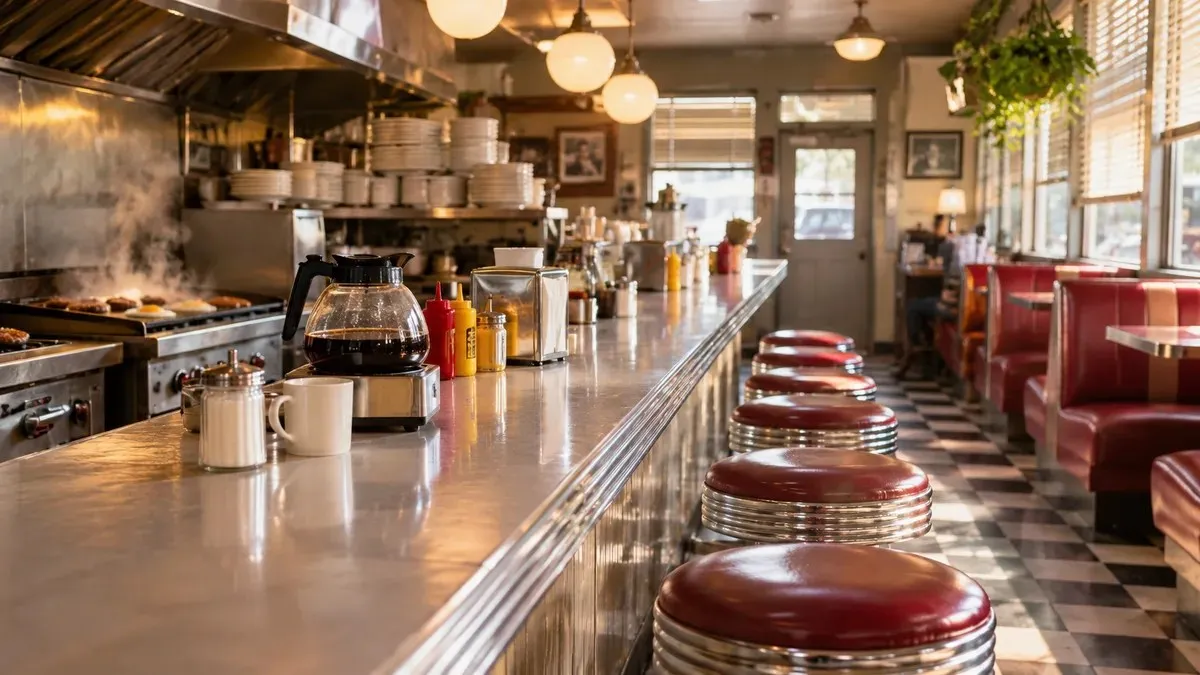
This image is AI-generated and for reference only.
The American diner grew out of a horse-drawn lunch wagon in Providence, Rhode Island, in 1872, according to American Heritage. It credits Walter Scott with the first one. Classic diners were factory-built for efficient service. You slide onto a stool at the counter, and the waitress greets you with an offer of coffee.
Borrow this: counter seating. A counter lets a single guest sit down quickly, and it lets staff serve several people at once.
2. The British greasy spoon, or caff
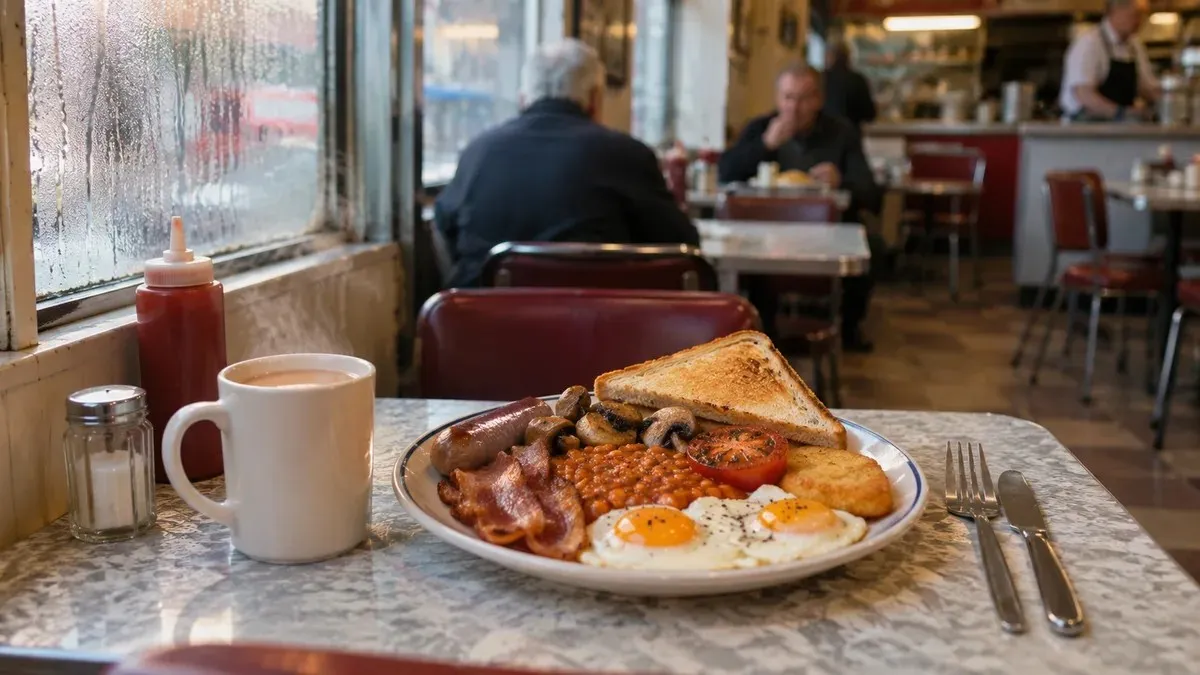
This image is AI-generated and for reference only.
Time Out London describes greasy spoons as old cafés with Formica tables, full English breakfasts and mugs of strong tea. Most are run by families. It also calls them a dying breed in London.
Borrow this: one famous plate. A caff is known for its breakfast, and regulars come back for it.
3. The Hong Kong cha chaan teng
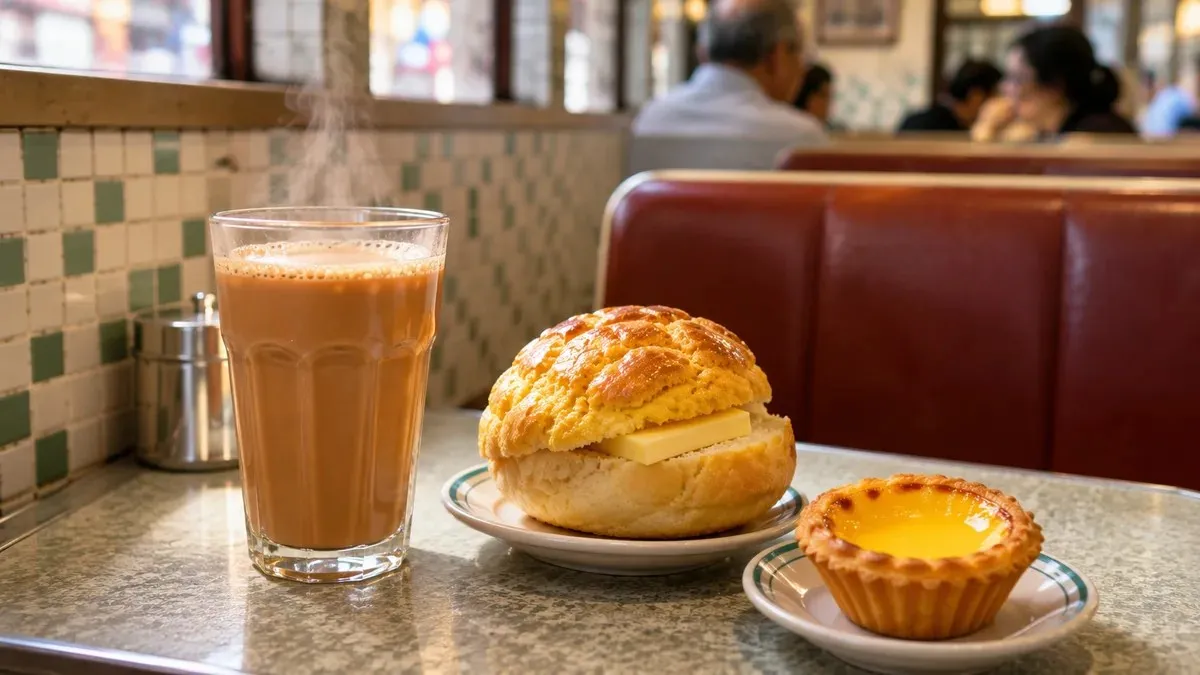
This image is AI-generated and for reference only.
Hong Kong’s everyday tea restaurant is built around its milk tea. The way that tea is made is on Hong Kong’s list of intangible cultural heritage.
After the Second World War, condensed milk replaced fresh milk in the tea. It gave working people the calories they needed, says Hong Kong Memory, a government heritage archive.
Borrow this: a signature drink. A drink made the same way every time is one regulars can count on.
4. The Japanese shokudo
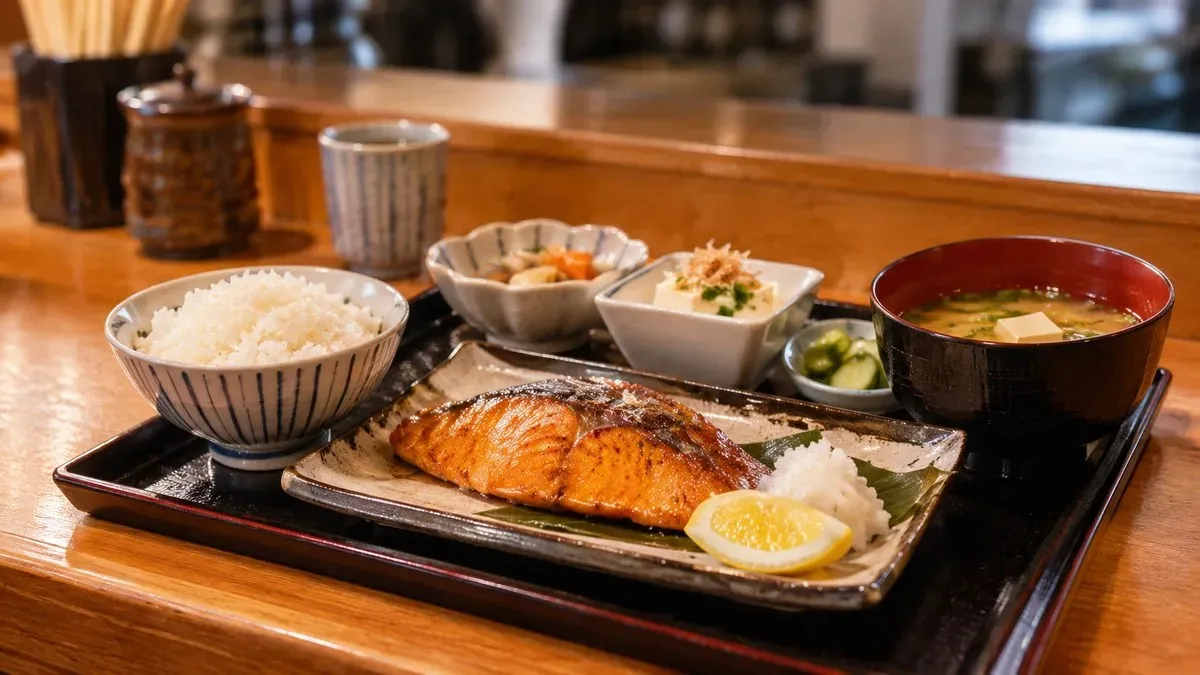
This image is AI-generated and for reference only.
A shokudo is a small, casual place to eat, often with set meals. That is how Japan’s tourism board describes it. The set meal is called teishoku: white rice, miso soup and side dishes.
Japan also has the kissaten, a coffee shop rather than a meal place. Kissaten first appeared in the early 20th century. They caught on during the Showa era, from 1926 to 1989, the tourism board’s guide to kissaten says.
Borrow this: the set meal. One price for a full plate makes ordering quick and food cost easy to plan.
5. The Singapore kopitiam
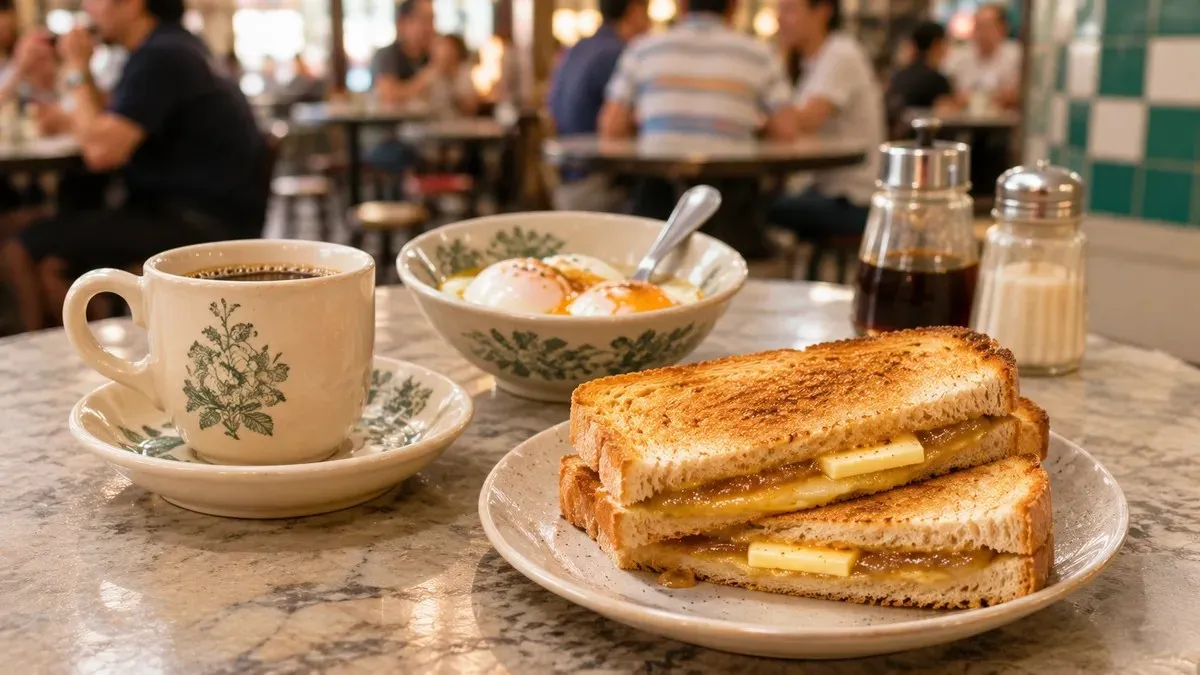
This image is AI-generated and for reference only.
A kopitiam is a coffee shop: “kopi” is Malay for coffee and “tiam” is Hokkien for shop, as Singapore’s National Heritage Board explains.
Hainanese-owned kopitiams emerged in Singapore in the 1930s. The menu was simple: toast, eggs and a drink of coffee or tea, according to the Board. The coffee was roasted with butter and sugar and drunk with condensed milk.
Borrow this: a simple breakfast menu. Toast, eggs and a hot drink is a menu any kitchen can run.
6. The Australian milk bar
Australia’s first milk bar opened in Sydney in 1932, set up by a Greek immigrant, Mick Adams, says State Library Victoria. Milk bars spread across the country from the 1930s to the 1970s, until supermarkets and convenience stores challenged them.
In the 1950s and 1960s, teenagers went to milk bars to buy milkshakes and play pinball.
Borrow this: one treat young people seek out, the way milk bars had the milkshake.
7. The French bistro
A bistro is a small local place serving simple, often homemade food, says Sortir à Paris. Its bigger cousin, the brasserie, began in Alsace serving beer made on site. Today a brasserie is open all day.
Borrow this: a neighbourhood feel. A small local place can be built around the people who live nearby.
8. The Mexican fonda
A fonda is known for its lunch, a comida corrida: one set meal at one low price, says the Mexico City government’s guide. Some fondas also include a simple dessert, such as rice pudding.
Borrow this: a weekday lunch menu at one price, for office workers who need to eat and get back.
9. The Indian dhaba
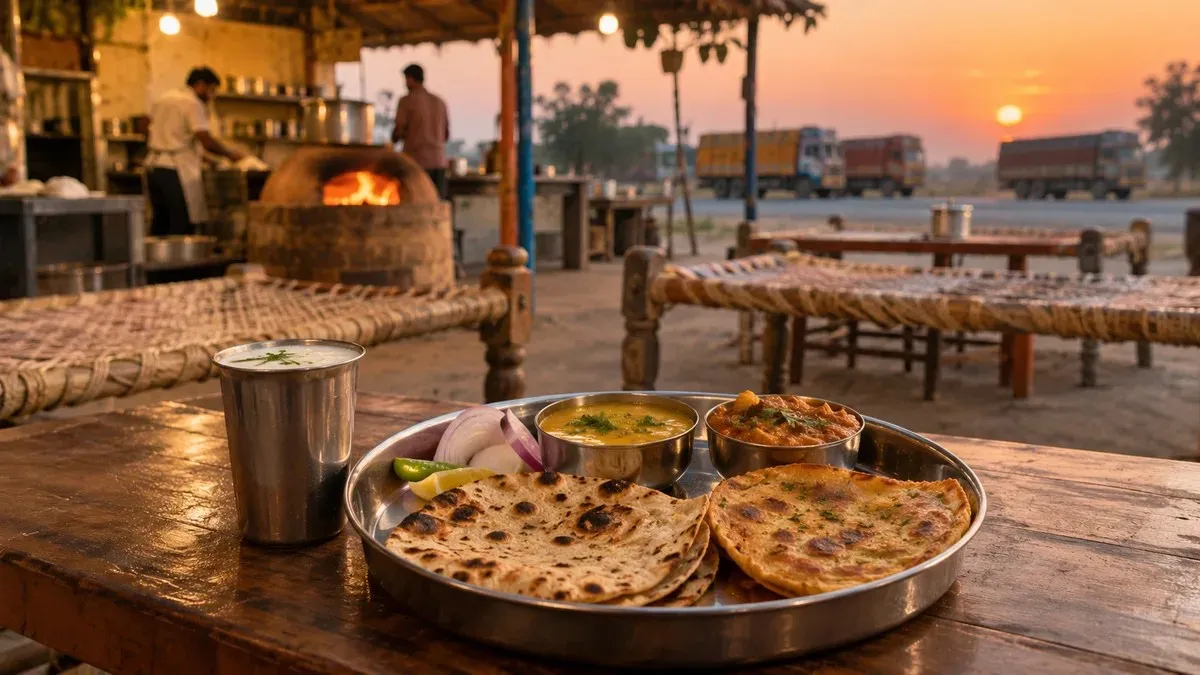
This image is AI-generated and for reference only.
The dhaba is India’s highway eatery. One famous dhaba at Murthal, on the Grand Trunk Road, served truck drivers rotis, dal and parathas, as a Scroll book excerpt describes.
Borrow this: a short menu that travellers can trust. A few dishes, made in volume, are easier to keep consistent.
10. The Irani café
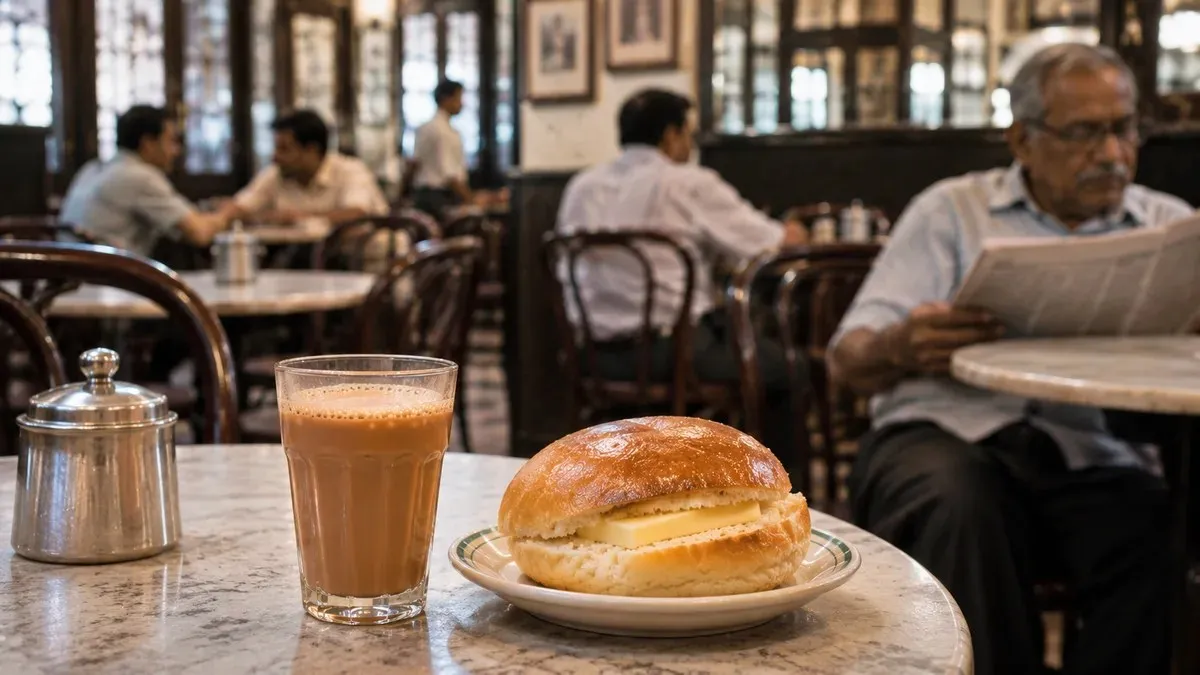
This image is AI-generated and for reference only.
Irani cafés were set up by immigrants from Iran. Many were Zoroastrians from Yazd and Kerman, who came to India in the 19th and 20th centuries. The cafés are known for bun maska and Irani chai, according to Sahapedia, which also notes that many are now closing down.
Borrow this: a cheap pairing that brings people back, like bun maska with chai.
11. The darshini
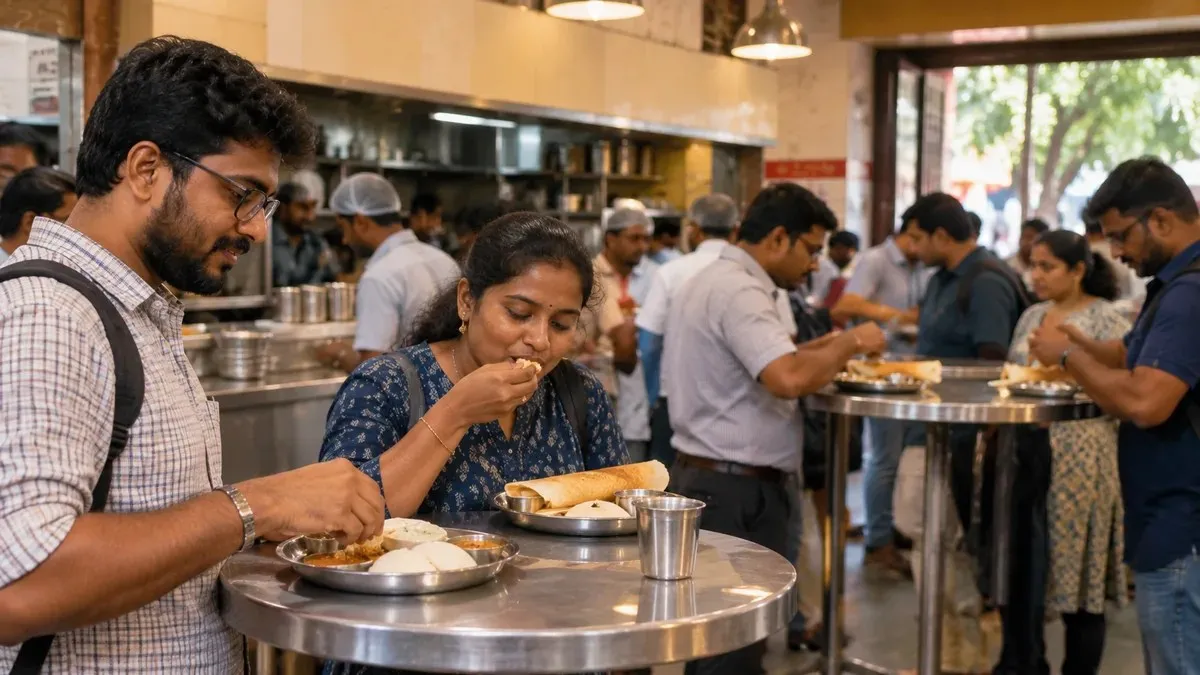
This image is AI-generated and for reference only.
The darshini serves South Indian tiffin, the same light meals sold in Udupi restaurants.
The first darshini, Café Darshini, opened in Jayanagar, Bengaluru, in 1983. Customers pay first and eat idlis, vadas and dosas standing at metal tables, according to The Caravan.
Borrow this: pay first, then serve. When payment is taken at the counter, every order is settled before the food goes out.
What Indian Restaurants Can Learn From These Types of Diners
From the people, the lesson is simple: write every request down, ask about split bills early and know your regulars. For the newer types, keep single portions, protein add-ons and a QR code at the counter.
From the places, three ideas suit Indian counters, cafés and tiffin centres well. They are a signature item, a set meal and paying first.
- A signature item. A milk tea, a breakfast or a bun maska gives regulars a reason to return. Our guide to restaurant menu design shows how to build a menu around it.
- Set meals. A fixed plate at one price, like a teishoku or a comida corrida, is quick to order and easy to cost.
- Pay first. Like a darshini, take payment at the counter first. A token then tells each customer when their food is ready. Our guide to token management for QSR counters explains how.
How a POS helps with these types of diners
Quick counter service only works if billing keeps up. On Petpooja’s quick service restaurant POS, a counter order bills in a few taps and sends a kitchen order ticket (KOT) to the kitchen.
Petpooja’s POS comes in four versions: Lite, Android, Offline POS and Electron. The name “Offline POS” refers to the version that runs on your own premises. The Offline, Android and Electron POS all keep billing for up to five days without internet; Lite does not.
Every version except Lite supports combos for set meals. The Offline and Electron POS also take a token display add-on for pick-up.
Petpooja’s POS also helps with the personality types. On the Android and Electron POS, item-wise instructions print on the KOT. A picky eater’s changes or an allergy note then reach the cook in writing. On the Electron POS, customer history shows a regular’s past orders. Split bill, also on the Electron POS, handles the group that pays separately.
What I could recommend from my end. Build each set meal as a combo before you open, so it is a single tap at the counter. On the Offline or Electron POS, the item-wise sales report then shows which plate sells best.
Conclusion
The types of diners come in two kinds: the people at your tables and the eateries that carry the name. Learn to spot the 12 personalities, from the Gen Z and solo diner to the regular, and treat every allergy as a rule.
Then pick the one idea from the places that fits your outlet. Set up your restaurant POS so requests reach the kitchen in writing and every guest is served on time.
Frequently Asked Questions
Which type of diner should staff be trained for first?
The diner with an allergy. A mistake with the picky eater or the complainer costs you a dish or a review; a mistake with an allergy can make someone ill. Train staff to ask about allergies and to note them on every order.
Is a café a type of diner?
It can be. Several types on this list, such as the kopitiam and the Irani café, began as coffee or tea shops. In the eatery sense, a diner is any everyday, low-priced place that people return to often. Our guide to the cost of opening a café covers the café side.
Is a diner the same as a quick service restaurant?
Not quite. A quick service restaurant is built around ordering at a counter and getting food fast, often with a token system. A diner usually gives you a seat, at a counter or a table, and a menu you order from. The darshini is the closest of these types to a quick service restaurant.
What is another word for a diner?
For a person, a diner is also called a guest, a customer or a patron. For a place, similar eateries go by other names, such as café, canteen or, in India, dhaba and tiffin centre.
Thanks. This helps us make the next article better.

A strategist by the day and writer by night, I find solace between books and coffee cups. A firm believer that words are the most powerful tool of the humankind