Most people planning a cafe in India arrive at a budget figure by asking around. One contact quotes Rs 10 lakh, another says Rs 40 lakh, a third mentions they spent Rs 75 lakh and still ran short by March. All three are correct, and that points to something worth understanding about how cafe setup costs work.
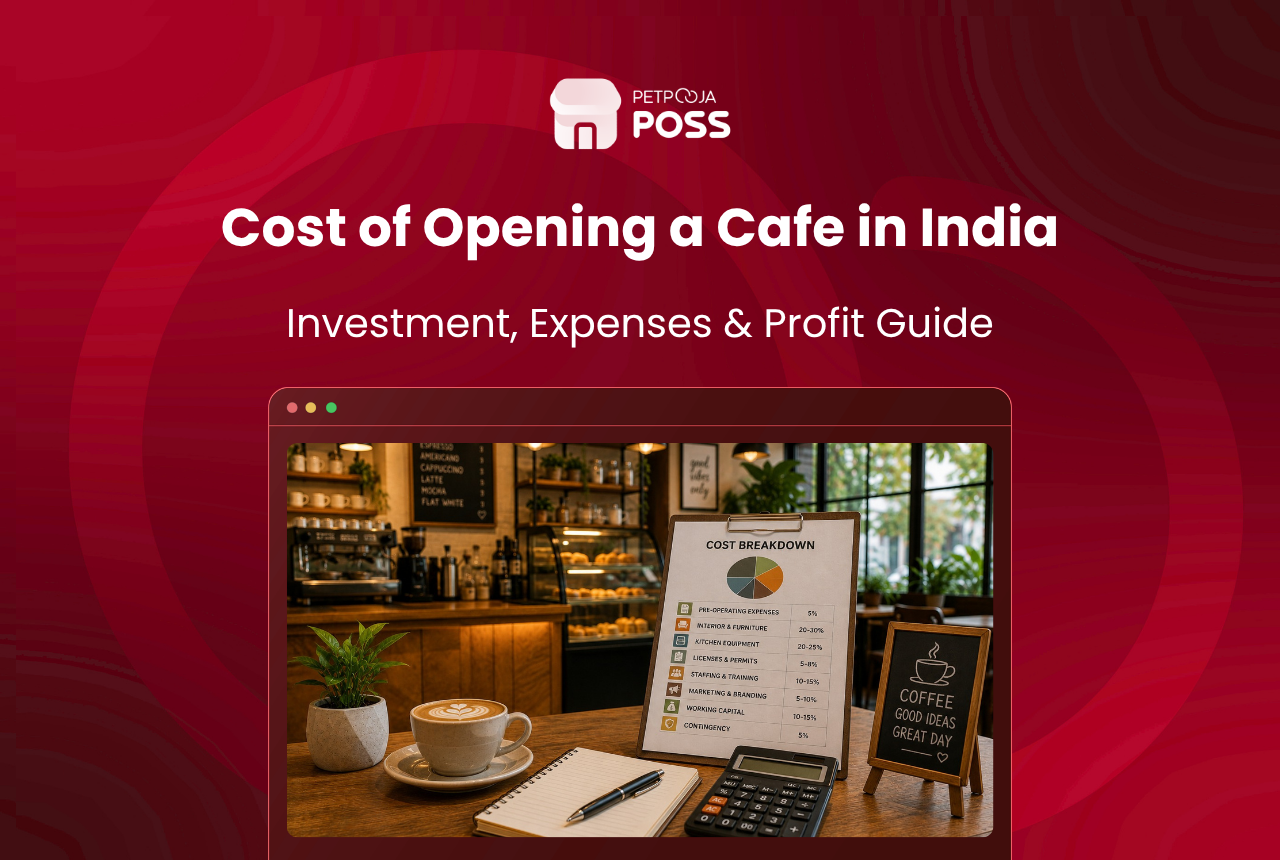
The real range runs from Rs 8 lakh at the lower end to north of Rs 1 crore for a premium metro setup, according to Restaurant India’s cafe cost analysis. Nine cost heads determine where you land: rent deposit (Rs 2-10 lakh), interiors (Rs 5-25 lakh), coffee equipment (Rs 60,000-15 lakh), kitchen (Rs 1-5 lakh), licences (Rs 50,000-2 lakh), branding (Rs 1-5 lakh), POS (Rs 30,000-1 lakh), inventory (Rs 50,000-2 lakh), and working capital for three to six months (Rs 3-10 lakh).
Two variables explain most of that spread: which city, and whether you pour chai or pull espresso.
Key Takeaways
- Total: Rs 8 lakh (tier-2, basic) to Rs 1 crore+ (premium metro)
- Rent deposit alone can eat Rs 5-10 lakh in a metro before a single wall is painted
- Chai equipment: Rs 60,000 to Rs 1.5 lakh. Specialty espresso: Rs 10-15 lakh
- Licences total Rs 50,000-2 lakh but FSSAI state licence processing eats 30-45 days
- Always hold six months of running costs untouched in a separate account
What Does a Rs 14 Lakh Cafe in Indore Actually Cost?
Opening a 450 sq ft chai-coffee cafe in Vijay Nagar, Indore, ran to Rs 13.7 lakh in late 2025 — rent deposit the single largest cost, followed by interiors and then equipment.
A cafe owner we spoke with in Vijay Nagar, Indore, opened a 450 sq ft chai-coffee place in November 2025. His menu: twelve items. Kulhar chai, filter coffee, cold coffee, three sandwich variants, maggi, and a couple of cookie options. Here is where his money went.
Rent deposit came first. Rs 35 per sq ft in that pocket of Indore, which meant Rs 15,750 a month and a 10-month deposit of Rs 1,57,500. Interiors cost Rs 4.8 lakh. He bought stock furniture from a Maninagar wholesaler in Ahmedabad (shipped by transport for Rs 8,000) because local Indore vendors were quoting Rs 1.2 lakh more for the same quality. Equipment was simple: two induction units, steel urns, a commercial blender, and a small refrigerator. Rs 1.1 lakh total. FSSAI basic registration was Rs 100. Shop Act licence, fire NOC, and GST registration added another Rs 35,000. Signage and a small Instagram launch campaign: Rs 65,000. Initial stock of tea, coffee beans, milk, bread, and packaging: Rs 42,000.
Working capital, meaning the cash he needed to survive until the customer base stabilised, was Rs 2.5 lakh. He had budgeted Rs 1.5 lakh. By January he had burned through it and added another lakh from savings. That is the line item every first-timer underestimates.
Grand total: roughly Rs 13.7 lakh. He hit break-even by April 2026, five months in. Our food cost calculator is what he uses now to track per-item margins every Monday.
What Does a Rs 52 Lakh Cafe in Bandra Actually Cost?
A 650 sq ft specialty espresso cafe in Bandra West came in at Rs 52 lakh — rent deposit and advance alone accounting for Rs 15.6 lakh before the contractor arrived.
Different city, different planet.
A specialty coffee cafe on a Bandra West lane, about 650 sq ft with 28 seats. The lease negotiation alone took six weeks. Rent: Rs 1,30,000 a month at roughly Rs 200 per sq ft. The landlord asked for a 10-month security deposit. That is Rs 13,00,000 gone before the contractor showed up. Add two months of advance rent, and the total rent commitment on day one crossed Rs 15.6 lakh.
Interiors ran Rs 14.5 lakh. Exposed concrete ceiling (which meant the plastering cost disappeared, but the electrician charged Rs 80,000 more to run conduit on raw surface). Custom pine-and-metal furniture. A long pour-over bar with built-in drainage. Two 2-ton split ACs, not 1.5-ton, because Bandra summers plus a south-facing glass front created a heat load the standard units could not handle. Rs 1.4 lakh just for cooling.
Equipment was the big line. A two-group La Marzocca Linea Mini: Rs 4.8 lakh. Mahlkonig EK43 grinder: Rs 3.2 lakh. Refrigerated display counter for croissants and cakes: Rs 1.1 lakh. Drip tower for cold brew, V60 station, Chemex set, milk jugs, tampers, and cleaning supplies: another Rs 1.8 lakh. Kitchen setup for a small food menu (toaster oven, panini press, undercounter fridge): Rs 2.3 lakh. Total equipment: Rs 13.2 lakh.
Licences came in at Rs 1.8 lakh because the state FSSAI licence took longer and the fire NOC required structural changes to the emergency exit. Branding, including the signboard, printed menus, a photoshoot for social media launch, and a 200-person opening event: Rs 3.5 lakh. Initial inventory (single-origin beans from Chikmagalur, milk from a local dairy, bakery items on consignment): Rs 85,000.
Working capital: Rs 8 lakh set aside. The owner projected break-even at month 14. Petpooja POSS runs the billing across dine-in, Swiggy, Zomato, and takeaway; the daily P&L report is what told her by month 5 that the cold brew line was carrying 78% gross margin while the food menu was dragging at 32%.
Grand total: roughly Rs 52 lakh.
Why Do Rent and Equipment Drive Almost All the Cost Difference?
Rent and equipment are the two cost heads that actually differ by city tier licences, branding, inventory, and POS stay surprisingly flat regardless of where you open.
Pull the two examples apart and compare them side by side, and you will notice something: licences, inventory, branding, and POS cost roughly the same in both cities. The numbers that blow up are rent and equipment.
The Indore cafe paid Rs 1.57 lakh in rent deposit. The Bandra cafe paid Rs 15.6 lakh. That single line item created a Rs 14 lakh gap. Interiors added another Rs 10 lakh gap. Equipment (because one served chai, the other pulled espresso) added Rs 12 lakh.
Everything else was within Rs 2 to Rs 3 lakh of each other.
| Cost Head | Indore (tier-2, 450 sq ft) | Bandra (metro, 650 sq ft) |
|---|---|---|
| Rent deposit + advance | Rs 1,57,500 | Rs 15,60,000 |
| Interiors | Rs 4,80,000 | Rs 14,50,000 |
| Equipment | Rs 1,10,000 | Rs 13,20,000 |
| Licences | Rs 35,000 | Rs 1,80,000 |
| Branding & signage | Rs 65,000 | Rs 3,50,000 |
| Initial inventory | Rs 42,000 | Rs 85,000 |
| Working capital | Rs 2,50,000 | Rs 8,00,000 |
| Total | ~Rs 13.7 lakh | ~Rs 52 lakh |
That is why the cost of opening a cafe in India varies so wildly. It is not that every cost head doubles in a metro. Only two of them do. The rest are surprisingly flat. Our bakery cost city-wise breakdown shows the same pattern.
What About the Costs That Do Not Show Up Until Month Two?
Both owners told us the same thing, independently: the biggest surprise was not any single cost head. It was how fast the working capital burned while the cafe was still unknown in the neighbourhood.
Rent does not pause while you build a customer base. Neither does electricity, milk delivery, or the four salaries due on the 1st. The Indore owner ran out of his initial Rs 1.5 lakh working capital in 11 weeks and had to inject Rs 1 lakh more from personal savings. The Bandra owner, having watched a friend go through the same thing a year earlier, kept Rs 8 lakh untouched in a separate savings account. She did not need all of it, but she needed Rs 5.4 lakh of it.
Budget six months. Not three. Not “whatever is left after the fit-out.” Six months of rent plus salaries plus raw materials, in a bank account you do not touch for interiors or equipment. The cafes that close in year one are rarely the ones with bad coffee. They are the ones that ran out of cash in March while the neighbourhood was still discovering them.
Where Do Licences Fit In?
Cheapest cost head on the list. Highest calendar cost.
Rs 50,000 to Rs 2 lakh total across four registrations. Apply them in this order — FSSAI first because it takes the longest, then GSTIN, then Shop & Establishment Act, then fire NOC:
- FSSAI registration – apply 45-60 days before opening
- GSTIN – apply once your turnover projection crosses Rs 20 lakh
- Shop & Establishment Act – apply within 30 days of signing the lease
- Fire NOC – apply alongside interiors (fire officer inspects the fit-out)
Here is what each registration costs and how long it takes:
| Licence | Cost | Processing Time | Where to Apply |
|---|---|---|---|
| FSSAI Basic Registration (turnover | Rs 100/year | Instant | FoSCoS portal |
| FSSAI State Licence (turnover >Rs 12L) | Rs 2,000-7,500/year | 30-45 days | FoSCoS portal |
| GSTIN (turnover >Rs 20L) | Free | 3-7 working days | GST Portal |
| Shop & Establishment Act | Rs 500-2,000 | 7-15 days | Municipal corporation |
| Fire NOC | Rs 1,000-5,000 | 15-30 days | District fire office |
Budget Rs 35,000 to Rs 50,000 for the full set in a tier-2 city. In a metro with a state FSSAI licence and a complex fire NOC, the total can touch Rs 1.8 lakh.
Start all four 45 to 60 days before your target opening. The Bandra cafe owner filed in the second week of January for an April launch and still had to push the opening by nine days because the fire NOC got stuck in the district office queue. Our FSSAI compliance checklist has the full document list and expected timelines.
Conclusion
Two cafes. One spent Rs 14 lakh in Indore, the other Rs 52 lakh in Bandra. The gap came almost entirely from rent and equipment. Licences, inventory, POS, and branding cost roughly the same in both cities. Fix rent below 20% of projected revenue. Cap interiors at 35% of total budget. Hold six months of survival cash. And track food cost every Monday, not every month-end. Use a P&L template from day one.
Frequently Asked Questions
Rs 8 to Rs 15 lakh in a tier-2 city. The Indore example above came in at Rs 13.7 lakh with a 450 sq ft space, twelve-item menu, basic interiors, and three months of working capital. A pure chai format can sit closer to the Rs 8 lakh end because the equipment bill drops below Rs 1.5 lakh.
Depends on the city. In metros, rent deposit. In tier-2, interiors and equipment. The Bandra cafe spent Rs 15.6 lakh on rent and advance alone.
The Indore cafe broke even in five months. The Bandra cafe is tracking toward month 14. Industry average sits at 12 to 24 months. Our post on cafe management challenges covers common delays.
Yes, for every food business regardless of size. Basic registration on the FoSCoS portal costs Rs 100 per year and applies to businesses with annual turnover under Rs 12 lakh. Above that threshold, you need a state licence, which costs Rs 2,000 to Rs 7,500 per year and takes 30 to 45 days to process. Apply before you sign the lease, not after.
Only as a kiosk, mobile cart, or home-roasting brand. Dine-in with a lease in any tier-1 city will blow past that on deposit and interiors. All 15 formats are laid out in our coffee shop business ideas guide.