
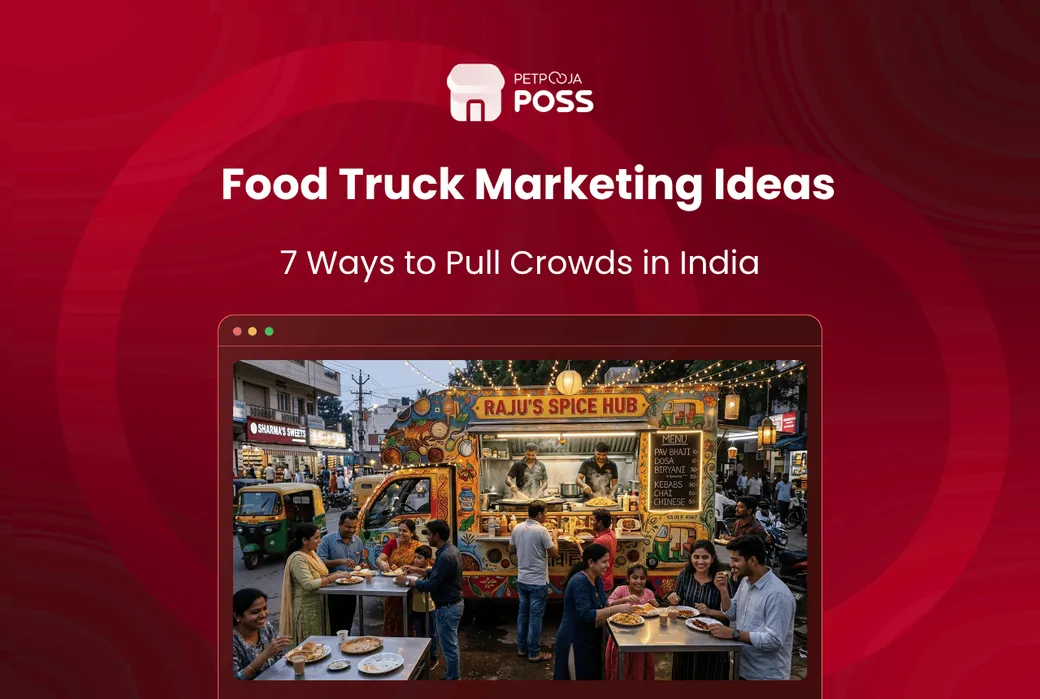



- A food truck’s hardest marketing job is telling people where it is parked today.
- Instagram brings new customers in; WhatsApp brings your regulars back.
- A clear brand and one signature dish make word-of-mouth do the work for you.
- Local food bloggers and a simple repeat-visit offer turn first-timers into regulars.
A food truck lives or dies on one question: do enough people know where you are and why they should walk over? Great food is the price of entry. Food truck marketing is what fills the queue. And because a truck has no fixed address and no walk-in signage like a restaurant, that marketing has to work harder.
The good news is that most of it costs time, not money. A clear brand, a busy Instagram, a daily WhatsApp update, and a reason to come back will do more than any billboard. The trick is doing them consistently, day after day, from the same phone you already own.
This guide covers seven practical ways to market a food truck in India, in the order they matter. Across the food businesses on Petpooja, the ones that grow fastest are rarely the ones with the best recipe. They are the ones easiest to find and remember.
Why Marketing Is Harder for a Food Truck
A restaurant has a fixed address, a signboard, and passing footfall. A food truck has none of that. It moves, so a customer who loved you last week may not know where you are this week. That lost thread is the single biggest leak in a truck’s sales.
That is also why a truck can win cheaply. It is small, personal and photogenic, which is exactly what social media rewards. A restaurant pays for prime rent and signage; a truck pays for none of it and reaches the same crowd through a phone. If you are still weighing the format, our guide on whether to open a food truck and the food truck vs restaurant comparison are worth a read first.
Here is the toolkit at a glance before we take each part in turn.
| Channel | What it does for a food truck | Cost |
|---|---|---|
| Brings new customers in with food photos and reels | Free | |
| Tells regulars where you are parked today | Free | |
| Delivery apps | Reach people who never saw the truck | Commission |
| Loyalty offer | Turns first-timers into repeat visits | Low |
| Food bloggers | Local reach through a trusted voice | Free meal or small fee |
The 7 Ways to Market Your Food Truck
With that gap in mind, here are the seven tactics that fill it, in the order they matter.
1. Build a Brand People Recognise
Marketing starts before the first post. A recognisable brand is a name people can say, a look they can spot from across a street, and a signature dish they come back for.
Keep it simple and consistent. One truck colour, one logo, one font on the menu board, and the same handle across every platform. A guest who saw your reel should recognise the truck when they walk past it.
Lean into what makes you different. A truck selling one thing well, say Kolhapuri misal or Korean corn dogs, is easier to remember and recommend than one selling forty dishes. Put that signature item front and centre in the name, the board, and every photo.
A tight menu helps the marketing in a second way too. It is faster to cook, quicker to photograph, and simpler for a happy customer to describe to a friend. “The corn dog truck near the metro” is a recommendation that spreads on its own.
2. Win on Instagram and WhatsApp
India had 462 million social media users in early 2024, per DataReportal’s Digital 2024 India report. For a food truck, two of those platforms carry most of the weight, and each does a different job.
Instagram is your shop window. Post the food, the sizzle, the queue and the happy faces, and lean on reels, since short video travels further than a still photo. Our note on Instagram marketing and video marketing tips cover the how.
Two platforms, two jobs Instagram The shop window Brings new people in WhatsApp The daily update Brings regulars back Instagram pulls new customers in; WhatsApp brings the regulars back.WhatsApp does the quieter, harder job: telling regulars where you are right now. A broadcast list and a daily status update, “parked at Bandra Linking Road till 11 pm tonight”, reaches the people most likely to actually turn up.
3. Make Your Location Impossible to Miss
This is the tactic most trucks skip, and it is the one that matters most. Every single day you move, tell people where you have parked, before the lunch or dinner rush, not after.
Post the spot on Instagram stories and your WhatsApp status the moment you set up. Pin the location on Google Maps if you hold a spot for a few hours. Say the timing plainly: where, and until when. A photo of the truck at the spot beats a written address, because people recognise the truck faster than they read a pin.
Say a truck parks near a Gurugram office park on weekday evenings and shifts to a Sunday market (an example). The regulars only follow if the update lands at the same time every day. Predictable beats clever here; people plan their evening around a truck they can count on, and a missed day teaches them not to bother checking.
4. Use Delivery Apps and Your Own Ordering
If you hold one spot long enough, delivery apps put your food in front of people who never saw the truck. Getting on Swiggy and Zomato is worth it when your location is steady and your margin can carry the commission.
Run that maths before you sign up. Add your own delivery app charges to your costs. Then put them through a restaurant profit margin calculator to see what your sales leave you. If the margin is tight, lean harder on direct WhatsApp orders, which carry no commission at all.
Do not ignore your own channel either. A simple ordering link or a restaurant website lets loyal customers order without the apps taking a cut. Our take on your site vs Swiggy and Zomato helps you balance the two. Use the apps for reach, and your own channel for the regulars who already know you.
5. Turn First-Timers Into Regulars
A first visit is expensive to earn. A second one is nearly free, and repeat customers are where a food truck’s profit actually lives. The way to get there is to capture the customer and give them a reason to return.
Take the phone number at billing, which a POS like Petpooja POSS does as part of the bill, then run a simple offer. A loyalty programme built around a free item on the fifth visit gives people a reason to seek you out rather than eat wherever is nearest.
That customer list is also your cheapest marketing channel. When you park somewhere new, one WhatsApp message to your regulars fills the first hour, before a single stranger has found you.
6. Team Up With Local Food Bloggers
A food blogger with a local following can put your truck in front of thousands of the exact people you want, in one post. For a truck, micro-influencers who cover your city beat big national names, because their followers eat where they eat.
Keep the deal fair and simple. A free meal or a small fee in exchange for an honest post works well. City food-blogger lists, like these Mumbai food bloggers, are a good place to find the right names for your area.
One honest post from a trusted local voice does more than ten of your own. Ask them to tag your location and handle, so the interest they create can actually find you. Time it for a day you know you will be parked in one spot, so the people who come looking are not met by an empty kerb.
7. Track What Actually Works
Marketing without numbers is guessing. You do not need a dashboard, only a habit of asking which day, spot and post pulled the biggest queue.
Your billing data answers most of it. A daily sales report shows your best days and busiest hours, so you learn that, say, Thursday evenings at one spot beat Saturday afternoons at another. Then you park where the sales are, not where you hope they might be.
Do more of what the numbers reward and quietly drop the rest. Over a few months, that single habit turns scattered effort into a route and a schedule your customers can rely on.
Conclusion
Food truck marketing is not one big campaign. It is a set of small, daily habits. A clear brand, a busy Instagram, a WhatsApp update the moment you park, and a reason for people to come back.
If you want a starting order, work through these four:
- Nail the brand. Settle a recognisable name, look and one signature dish.
- Post daily. Put the food on Instagram and your location on WhatsApp, every single day.
- Add reach. Get on delivery apps once you hold a steady spot, and check the commission first.
- Keep them coming back. Capture phone numbers at billing and run a simple loyalty offer.
Pick a couple of these to start, do them every day for a month, and watch which ones move the queue. The tools are cheap and the reach is real, with India’s food services market projected to keep growing strongly, per the NRAI India Food Services Report 2024. The trucks that win are rarely the ones with the fanciest food. They are the ones the neighbourhood can find, remember and count on.
Frequently Asked Questions
How do food trucks attract customers in India?
The mix that works is a recognisable brand, a strong Instagram and WhatsApp presence, and a daily post saying exactly where the truck is parked. Delivery apps and a simple loyalty offer then turn first-timers into regulars. No single tactic carries it, and the daily location post is the one most trucks skip.
Which social media platform is best for a food truck?
Instagram for the food photos and reels, WhatsApp for telling regulars where you are today. Both reach most of India’s online audience, so a truck does not need to be on every platform. Pick these two, post daily, and reply to comments and messages fast.
How much should a food truck spend on marketing?
Most of it costs time, not money. Photos from a decent phone, daily posts, and replies to reviews are free. The paid parts, a few boosted posts or a food blogger meal, are optional and small. Start with the free work and add paid reach only once the free channels run well.
Do food trucks need to be on Swiggy and Zomato?
It helps if you park in one spot long enough for delivery to work, since the apps reach people who never saw the truck. The trade-off is commission, so check the cost against your margin first. A truck that moves often may lean more on its own WhatsApp orders instead.
How do I get repeat customers for a food truck?
Capture the phone number at billing and run a simple loyalty offer, like a free item on the fifth visit. Then use WhatsApp to tell those customers where you are parked each day. Repeat visits come from being easy to find and giving a small reason to come back.
Thanks. This helps us make the next article better.



Comments
Loading comments…