
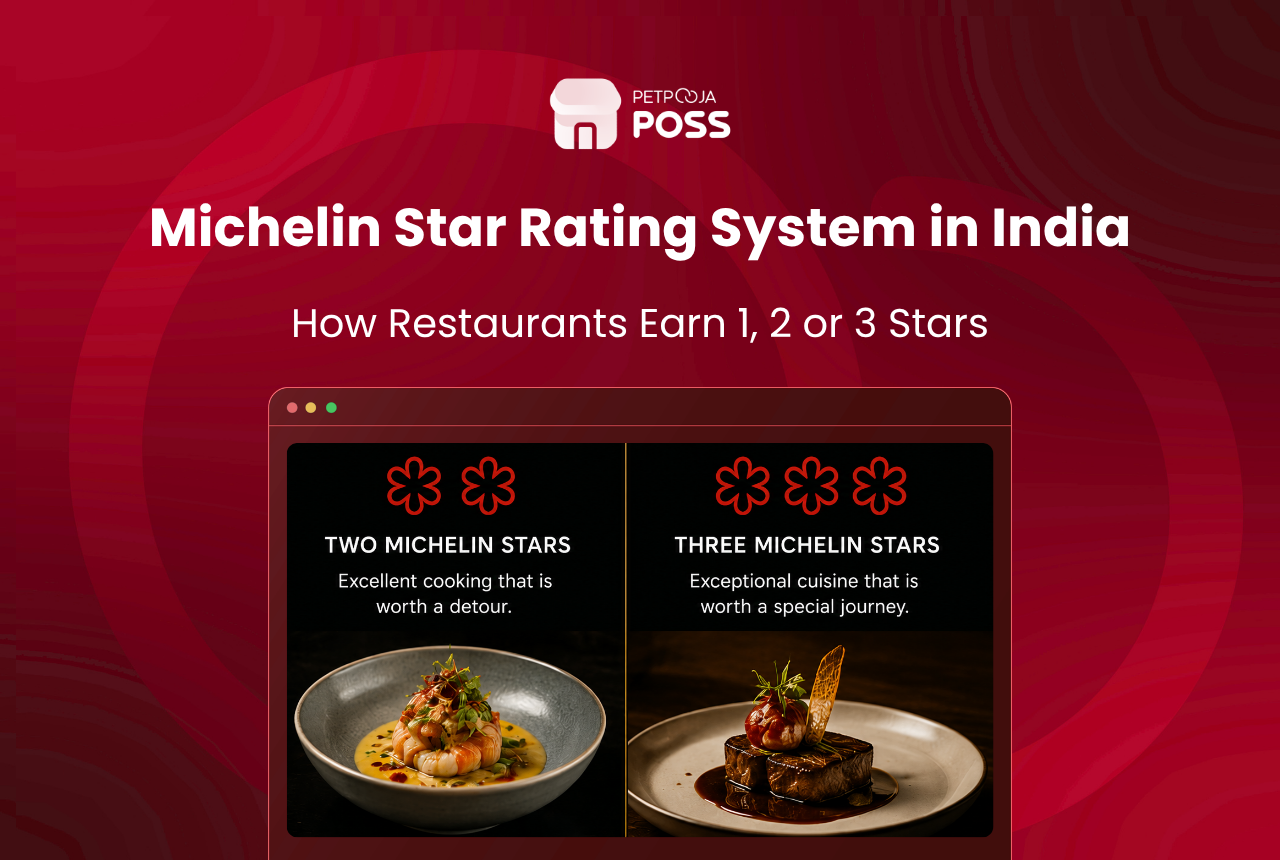
Michelin awards one, two or three stars to a restaurant for the food on the plate and nothing else. Not the decor, not the service, not the tablecloth.
No restaurant inside India holds one, because Michelin does not publish a restaurant selection for India. Any list of “Michelin star restaurants in Mumbai” is describing something that does not exist.
That does not mean Michelin has ignored the country. In October 2025, 36 Indian hotels entered the Michelin Key selection, the guide’s separate award for places to stay. Indian restaurants abroad have held stars for 25 years.
Key Takeaways
- Stars rate cooking alone, judged on five criteria
- Stars go to the restaurant, not to the chef
- India has no Michelin restaurant guide, so no starred restaurants here
- 36 Indian hotels won Michelin Keys in October 2025
- Ratings are reassessed every year and can be lost
What Does the Michelin Star Rating System Judge?
Five things, and none of them are the dining room. The Michelin Guide judges on:
- Quality of the ingredients used in the dishes
- Harmony of flavours across the plate
- Mastery of cooking technique
- The chef’s personality as expressed through the cuisine
- Consistency across the whole menu and over time
That last one carries the most weight, and it is the one most owners underestimate. A brilliant dish on a Tuesday counts for little if the same dish drifts by Saturday.

| Award | What It Recognises |
|---|---|
| One star | Top-quality ingredients, distinct flavours, prepared to a consistently high standard |
| Two stars | The chef’s personality and talent evident in expertly crafted dishes, refined and inspired |
| Three stars | Cooking elevated to an art form, with dishes destined to become classics |
One correction is worth making here, because the mistake is repeated almost everywhere. Stars belong to the restaurant, not the chef. A chef who leaves does not carry the star to a new kitchen, and the rating stays with the address to be tested again.
Formality has nothing to do with it either. Michelin states that a restaurant’s style and comfort level do not affect the award, so a plain room can hold a star while a lavish one holds none.
That surprises people who assume stars and fine dining are the same thing. White tablecloths help a restaurant charge more, but they earn nothing from an inspector. In 2016 two Singapore hawker stalls took stars, the first street-food kitchens to manage it.
How Did the Michelin Guide Start?
The oddest fact about fine dining is that it is rated by a tyre company. The Michelin Guide began with tyres, and the link is not a coincidence.
André and Édouard Michelin published the first guide in France in 1900 to give drivers reasons to drive, which sold tyres. It listed mechanics, petrol pumps and places to eat, and the first edition ran to about 35,000 free copies.

Restaurants took over. Michelin began awarding a single star in 1926, and by 1931 the two and three star tiers were in place. The structure has barely changed since.
What Kinds of Awards Does Michelin Give?
Four of them. Stars get the attention, but the other three matter more to most businesses: the Bib Gourmand, the Green Star and the Michelin Key.
A Bib Gourmand marks good cooking at a modest price, which is a commercially useful badge for the mid-market. A Green Star recognises restaurants leading on sustainable practice. A Michelin Key rates hotels rather than restaurants, on a one to three scale of its own.
Below all of them sits plain inclusion. A restaurant listed in the guide with no star and no Bib has still been inspected and judged worth recommending, which is a distinction in itself.
Keys are judged on architecture, service, character and the consistency of the stay, so a hotel can hold Keys while its own dining room holds nothing at all.
Does India Have Michelin Stars?
No, and the reason is simple. Michelin only rates restaurants in places where it publishes a selection, and it has never published one for India.
Inspectors are not sent to a country informally. Without a guide there is no selection, so a restaurant in Bandra or Indiranagar cannot be starred however good it is. That is a coverage decision, not a verdict on Indian cooking.
The Key selection changed the picture in one respect. Michelin’s 2025 hotel awards included 36 Indian properties, with Taj Lake Palace in Udaipur and Taj Falaknuma Palace in Hyderabad taking three Keys apiece. Rajasthan took a large share of the rest.
Worth being precise about what that means, because the two awards get mixed up constantly. A Key rates the hotel as a place to stay, judged on architecture, service and character. It says nothing about the food, so a three-Key palace hotel in Udaipur still has no starred restaurant, and neither does anywhere else in the country.
What it does show is that Michelin inspectors are now assessing Indian properties on the ground. Whether a restaurant selection follows is Michelin’s call, and the company has not announced one.
Indian Chefs With Michelin Stars
Indian chefs have held stars abroad for twenty-five years, even though the award itself sits with the restaurant rather than the person.
Two London kitchens won the first ones in 2001: Tamarind under Atul Kochhar, and Zaika under Vineet Bhatia. That is why both men get called the first Indian chef to win a star. Vikas Khanna’s Junoon in New York took one in 2011 and held it for seven consecutive years.
Garima Arora became the first Indian woman to hold a star, at Gaa in Bangkok in 2018, and later took a second.

The ceiling moved in May 2025, when Trèsind Studio in Dubai took three stars under chef Himanshu Saini, the first Indian restaurant anywhere to reach that level. It had climbed from one star in 2022 to two in 2023. Our roundup of famous Indian chefs covers the names behind these kitchens.
How Restaurants are Chosen and Why Stars Move
Nobody applies and pays their way in. A restaurant can ask to be considered, and readers can write in, but the decision sits with the inspectors.
Inspectors are full-time Michelin employees, usually from a hospitality background, and they book and pay like ordinary diners. Anonymity is the point, so a kitchen that recognises the table has already lost the test.
They visit repeatedly across seasons and service times, and order widely rather than sticking to signature dishes. That is how consistency gets measured rather than assumed.
Ratings are then reassessed every year. Stars are raised, lowered and removed, and a restaurant already in the guide does not reapply for anything. This is why any list of starred restaurants carries a date, and why a five-year-old list is close to useless.
Why Do Some Chefs Not Want a Star?
A star fills a dining room and lets a kitchen charge more. It also locks that kitchen into a standard it has to hit every single service.
The best-known case is Sébastien Bras, whose Le Suquet in southern France had held three stars since 1999. In September 2017 he asked to be left out of the 2018 guide, citing the pressure of inspectors arriving unannounced two or three times a year.
Michelin dropped the restaurant from the 2018 edition, then put it back in 2019 with two stars. Its position is that a star is an observation rather than a gift, so it cannot really be handed back.
The wider complaint from chefs is that the standard rewards precision over risk, and that a kitchen chasing consistency stops experimenting. Set against that, a star reliably fills a dining room, which is why most kitchens still want one.
What Can Indian Restaurant Owners Take From This?
Four of Michelin’s five criteria rest on the chef’s talent. The fifth is a systems problem, and it is the one you can actually build.
Consistency across the menu and over time is what separates a good kitchen from a rated one, and it does not come from inspiration. It comes from fixed recipes, controlled portions, and knowing that the dish leaving the pass at 11pm on a Saturday matches the one from Tuesday lunch.
As an example, a 40-cover fine-dine in Kolkata might serve its signature dish 60 times across a weekend. Holding that dish steady across two chefs and three services is a process question, not a talent question.
A restaurant POS helps on the measurable half of it, by holding recipes and portion sizes against every item, flagging when a dish runs short, and showing which items actually sell. Our guide on fine-dine POS features covers what a table-service floor needs from it.
The pricing side matters too, because a Bib Gourmand style reputation rests on value rather than expense. A menu pricing calculator will tell you whether a dish can hold its margin at the price your guests expect.
Conclusion
The Michelin star rating system judges cooking on five criteria and awards up to three stars to the restaurant, never to the chef. Ratings are reviewed every year and can go down.
India has no restaurant selection, so no starred restaurants sit here. What India does have, since October 2025, is 36 hotels in the Michelin Key list, and a growing record of Indian kitchens taking stars overseas.
For an owner here, the useful part is not the badge. It is the standard behind it, and consistency is the piece you can build with recipes, portion control and a restaurant POS that keeps the same dish the same. If you are still planning the room, our restaurant startup guide covers the setup decisions that come first.
Frequently Asked Questions
No. Michelin has not published a restaurant selection covering India, so no restaurant in the country can hold a star. Lists claiming otherwise are usually ranking fine-dining restaurants by their own standards. Setting one up is a separate question, and our guide to a fine dining restaurant covers it.
Anonymous inspectors visit repeatedly and judge on five criteria: ingredient quality, harmony of flavours, mastery of technique, the chef’s personality in the cooking, and consistency. A restaurant can ask to be considered, but it cannot pay for a star and does not apply for one.
Yes. Every rating is reassessed each year, and stars are regularly lowered or removed when standards slip or a kitchen changes direction. Holding a star is an annual test rather than a permanent title.
Trèsind Studio in Dubai, under chef Himanshu Saini, which took three stars in May 2025 and became the first Indian restaurant anywhere to reach that level. It is in Dubai rather than India, since the Michelin Guide covers the UAE.
Stars rate restaurant cooking, Keys rate hotels as places to stay. Keys run on a one to three scale of their own and are judged on architecture, service and character. India appears in the Key selection but not in any star selection. The distinction matters when you are choosing a restaurant model with rooms attached.


