
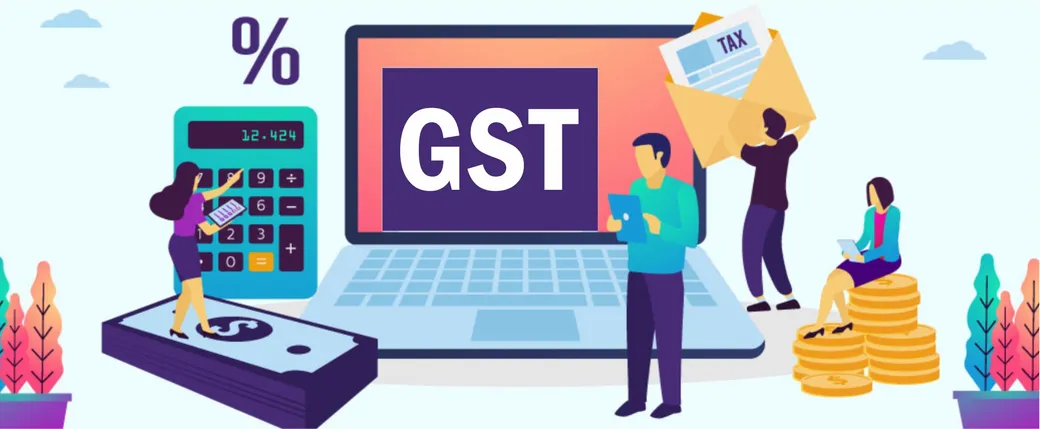



These are the GST updates for restaurants, newest first. The latest could matter most: on 8 October 2026, the GST Council recommended letting restaurants claim limited input tax credit (ITC). It is not law yet.
One thing has held through all of it. A restaurant outside a specified premises, which means certain hotels, still charges 5% GST without input tax credit. What changed around that rate is how your inputs are taxed, who pays on delivery-app orders, and how you file. Each update below says what changed under the new rule and what it means for your outlet.
Key Takeaways
- Start with the newest: the Council has recommended limited input tax credit for restaurants, not yet notified.
- Then the rate: restaurant food is still 5% without input tax credit outside specified premises.
- Next, 2025: cheaper food inputs, locked GSTR-3B figures and a three-year limit on old returns.
- And delivery apps have paid the GST on most restaurants’ app orders since January 2022.
GST Updates for Restaurants at a Glance
GST changed on fifteen dates since 2021 in ways that touch a restaurant’s bills, costs or returns. Here they are on one line each, newest first.
GST updates for restaurants, newest first Oct 2026 Input credit for restaurants proposed Feb 2026 3B interest calculated for you Jan 2026 Hotels opt in online Nov 2025 3-year limit on old returns Sep 2025 Inputs cheaper, 5% stays Jul 2025 3B tax liability locked Apr 2025 Specified premises redefined Jan 2025 Rent reverse charge lifted Oct 2024 Invoice Management System Jul 2024 TCS cut to 0.5% Jan 2024 App sales in GSTR-1 14(b) Aug 2023 E-invoice ₹5 cr; cinema food 5% Jul 2022 Table 3.1.1; packed food taxed Jan 2022 Apps pay GST on your food Oct 2021 Cloud kitchen 5%; parlour 18% then The larger, darker dot is a recommendation, not law. Fifteen dates in five years. Each has its own section below, in the same order.The rest of this guide takes them one at a time, newest first.
October 2026: Council Recommends Input Tax Credit
The 57th GST Council announced its recommendations on 8 October 2026, and several reach restaurants directly. The Council’s own release says they take effect only through “circulars/ notifications/ law amendments which alone shall have the force of law” (57th GST Council recommendations).
Limited Input Tax Credit for Restaurants
The Council recommended “limited input tax credit in the same line of business, for the supply of restaurant/outdoor catering services”. Today a restaurant at 5% claims no credit at all. If this is notified, a restaurant could claim credit on some purchases used for the same kind of service. Passenger transport and tour operators already get credit this way. Which purchases count will depend on the notification.
Delivery Through Apps at 5%
When a rider who does not need GST registration delivers through an app, the app would pay GST on that delivery, at 5% without input tax credit. This is about the app’s delivery charge, not your food bill.
Late Fee Waived for Small Taxpayers
For businesses with turnover up to ₹5 crore in the previous year, the late fee on a delayed GSTR-3B would be waived if the return is filed by the end of the month it was due.
A Quarterly Scheme for B2C Outlets
The Council approved, in principle only, an optional Annual Return Quarterly Payment (ARQP) scheme. It is meant for businesses up to ₹5 crore that sell only to unregistered buyers, which fits many restaurants.
Nothing Changes Until It Is Notified
Until then, keep billing at 5% without credit, and keep your purchase invoices in order, so you are ready to claim if the credit rule is notified.
February 2026: GSTR-3B Interest Calculated for You
The GST portal now works out the interest in Table 5.1 of GSTR-3B itself. GSTN’s advisory says taxpayers “would not be allowed to amend the auto-populated values downward” (GSTN advisory on interest).
Interest Can No Longer Be Reduced
You can no longer reduce the interest the portal calculates. From the February 2026 period, the breakup of your liability by tax period, which the interest is worked out from, is also filled in and has to be confirmed before filing.
January 2026: Hotels Opt In to Specified Premises Online
A hotel can now file its declaration to become a “specified premises” on the GST portal, through Annexure VII or VIII. For the year 2026-27, the window ran from 1 January to 31 March 2026.
Hotel Restaurants Can Move to 18%
This matters only to a restaurant inside a hotel. If the hotel opts in, its restaurant charges 18% with input tax credit instead of 5% without. A standalone restaurant cannot file this declaration at all.
November 2025: A Three-Year Limit on Old Returns
From the November 2025 tax period, the GST portal no longer accepts a return filed more than three years after its due date. It covers GSTR-1, GSTR-1A, GSTR-3B, GSTR-4, and GSTR-9 and 9C.
Returns Older Than Three Years Close
An unfiled return older than three years is now shut for good. If an outlet has old returns pending, file them before they cross the line.
Registration in Three Working Days
From 1 November 2025, new Rule 14A gives a simplified registration, granted within three working days, to businesses whose tax on supplies to registered buyers is up to ₹2.5 lakh a month. Most restaurants sell mainly to diners, so most new outlets qualify.
September 2025: Cheaper Food Inputs, 5% Rate Unchanged
The rate changes recommended by the 56th GST Council took effect on 22 September 2025. The restaurant rate was not among them (56th GST Council recommendations).
Restaurant Food Stays at 5% Without Credit
The rate notification, Notification 15/2025-Central Tax (Rate), left the restaurant entry as it was: 5%, on condition that input tax credit is not taken. Our guide to GST on restaurant bills explains which rate applies to you.
Many Food Inputs Got Cheaper
Butter and ghee, namkeen, cakes, pastries, biscuits, chocolates and ice cream moved to 5%. Packaged paneer, roti and paratha became nil-rated. Packaged water dropped to 5%, while sweetened aerated and caffeinated drinks went up to 40%. Our list of new GST rates on food covers each item.
For a 5% restaurant, lower tax on a purchase is a straight saving, because you could not claim it back anyway. A bakery or sweet shop selling these as goods must re-price them at the new rates.
Standalone Restaurants Cannot Choose 18%
The Council clarified “that a stand-alone restaurant cannot declare itself as a ‘specified premises’ and consequently cannot avail the option of paying GST at the rate of 18% with ITC”. Only a premises that supplies hotel rooms can.
Hotel Rooms Up to ₹7,500 Moved to 5%
Rooms at or below ₹7,500 a night moved from 12% with credit to 5% without. That is a room rate, not a food rate. Our guide to GST on hotel rooms covers what it means for an in-house restaurant.
No Annual Return Up to ₹2 Crore
A separate notification on returns, Notification 15/2025-Central Tax, removed the GSTR-9 annual return for businesses with turnover up to ₹2 crore, from the 2024-25 year onwards.
July 2025: GSTR-3B Tax Liability Locked
From the July 2025 tax period, the tax liability that GSTR-3B fills in from your GSTR-1 can no longer be edited in GSTR-3B.
Correct Sales in GSTR-1A, Not GSTR-3B
A mistake in your sales figures now has to be corrected in GSTR-1A before you file GSTR-3B. Get the sales return right first.
April 2025: Specified Premises Redefined
From 1 April 2025, a hotel is a “specified premises” if it supplied any room at a value above ₹7,500 a night in the previous year, or if it opts in by declaration (Notification 05/2025-Central Tax (Rate)). Before this, the test was the room’s declared tariff.
Last Year’s Room Values Decide the Rate
A hotel’s restaurant now looks at last year’s actual room values, not the rate card, to know whether it charges 18% with credit or 5% without. Our guide to GST billing for restaurants walks through the test.
E-Invoices Must Be Reported Within 30 Days
From 1 April 2025, a business with turnover of ₹10 crore or more must report each e-invoice to the invoice portal within 30 days of its date. A larger chain billing corporate clients must get each such bill registered on the invoice portal, which issues its invoice reference number (IRN), within that time.
January 2025: No Reverse Charge on Rent Under Composition
From October 2024, a business renting commercial property from an unregistered landlord had to pay GST on the rent itself, under reverse charge. From 16 January 2025, restaurants under the composition scheme are excluded (Notification 07/2025-Central Tax (Rate)).
Composition Outlets Stop Paying GST on Rent
A composition restaurant renting from an unregistered owner no longer pays this tax. For the months in between, 10 October 2024 to 15 January 2025, CBIC Circular 245/02/2025-GST accepted the position as it stood.
October 2024: Invoice Management System Starts
The Invoice Management System (IMS) went live on 1 October 2024. It lets a buyer accept, reject or keep pending each invoice its suppliers report, before claiming credit (GSTN FAQs on IMS).
Buyers Can Reject Your Invoices
A 5% restaurant claims no credit, so IMS barely touches its purchases. It matters if you bill registered businesses, such as corporate catering, because those buyers can now reject your invoices.
July 2024: TCS on App Sales Cut to 0.5%
From 10 July 2024, the tax that apps collect at source (TCS) on sales they do not pay GST on fell from 1% to 0.5% (Notification 15/2024-Central Tax).
Less TCS on Goods Sold Through Apps
Ordinary restaurant orders through apps carry no TCS, because the app pays their GST. The cut helps on everything else you sell through an app, such as goods, and on app orders from a restaurant in a specified premises.
January 2024: App Sales Reported in GSTR-1 Table 14(b)
From the January 2024 tax period, GSTR-1 has a table for sales on which an app pays the tax. GSTN’s advisory says the supplier reports them in Table 14(b), and “tax on such supplies shall be paid by the ECO and not by the supplier” (GSTN advisory).
Report App Sales in Table 14(b)
Your app sales go in Table 14(b) as a monthly summary, net of credit and debit notes. Corrections to an earlier month go in Table 14A(b). The figure flows into Table 3.1.1(ii) of GSTR-3B by itself, with no tax for you to pay. The app reports the same orders in its own Table 15.
Where app sales go in the returns You The app GSTR-1 Table 14(b) the sales, no tax GSTR-1 Table 15 same orders, with tax GSTR-3B 3.1.1(ii) fills itself, ₹0 to pay GSTR-3B 3.1.1(i) app pays tax in cash Your side shows the sales. The app’s side pays the tax. Both columns describe the same orders. You fill in only Table 14(b); GSTR-3B Table 3.1.1(ii) fills itself, with no tax.Take a café in Koramangala, as an example. In one month it bills ₹3,12,640 in-house before tax and sells ₹1,84,350 of food through apps. It pays ₹15,632 of GST on the first and nothing on the second, but its turnover is the full ₹4,96,990.
August 2023: E-Invoice From ₹5 Crore, Cinema Food at 5%
Two changes took effect on 1 August 2023.
E-Invoicing Reaches ₹5 Crore Businesses
The turnover limit for compulsory e-invoicing came down from ₹10 crore to ₹5 crore (Notification 10/2023-Central Tax). Restaurants are not on the exempt list. So an outlet at ₹5 crore or more needs an IRN on its bills to registered businesses, though not on ordinary diner bills. Our guide to e-invoicing for restaurants explains which bills need one.
Food in Cinemas Is Restaurant Service
CBIC clarified that food sold in a cinema is taxable as restaurant service when it is sold separately from the ticket (Circular 201/13/2023-GST). An outlet inside a multiplex charges 5%. A ticket-and-food combo sold as one composite supply takes the cinema’s rate.
July 2022: Table 3.1.1 Added, Packed Food Taxed
Two changes in July 2022 still shape restaurant returns and purchase costs.
GSTR-3B Gets Table 3.1.1
Notification 14/2022-Central Tax, dated 5 July 2022, added Table 3.1.1 to GSTR-3B for sales on which an app pays the tax (Notification 14/2022-Central Tax). From then until January 2024, a restaurant entered its app orders in 3.1.1(ii) itself and kept them out of Table 3.1(a). Since January 2024 that row fills in from GSTR-1.
Pre-Packaged and Labelled Food Taxed
From 18 July 2022, items such as curd, lassi and puffed rice attract 5% GST when “prepackaged and labelled” (CBIC FAQs on pre-packaged food). For a restaurant, packed inputs cost more, and that tax cannot be claimed back at 5%.
January 2022: Delivery Apps Start Paying GST
Since 1 January 2022, when a diner orders your food through a delivery app, the app pays the 5% GST and issues the bill. Restaurant service was added to Section 9(5) of the CGST Act by Notification 17/2021-Central Tax (Rate), and CBIC Circular 167/23/2021-GST set out how it works.
Who Bills and Who Pays
The app issues the invoice and pays the GST in cash, even for an unregistered restaurant. The exception is a restaurant in a specified premises, which still bills app orders itself.
| How the order comes in | Who charges and pays the GST | Who issues the bill |
|---|---|---|
| Dine-in, takeaway, or a phone order you deliver yourself | You | You |
| Food ordered through a delivery app | The app | The app |
| An app order from a restaurant in a specified premises | You, and the app collects TCS | You |
For most outlets, then, the app handles the GST on every food order it carries. What it does not handle is below.
What Stays Your Liability
Only restaurant service moved to the app. On anything else you sell through it, the circular says “the liability to pay GST continues on such supplier”. You charge the GST, issue the invoice, and the app collects TCS. App sales also still count in your turnover for every GST threshold.
TCS Stopped on App Food Orders
Because the app now pays the GST, the circular says it “will no longer be required to collect TCS” on restaurant service. The GST on the app’s own commission still applies, and at 5% you cannot claim it back.
Credit Only if the Invoice Shows in GSTR-2B
Also from 1 January 2022, input tax credit is available only where the supplier has reported the invoice, so that it shows in your GSTR-2B. This matters to outlets that claim credit, such as restaurants in a specified premises at 18%.
October 2021: Cloud Kitchens 5%, Ice Cream Parlours 18%
CBIC’s Circular 164/20/2021-GST, dated 6 October 2021, settled two questions restaurants were asking (Circular 164/20/2021-GST).
Cloud Kitchens Count as Restaurant Service
Food cooked and supplied by “cloud kitchens/central kitchens” is restaurant service, at 5% without input tax credit. A delivery-only kitchen bills like any other restaurant.
Ice Cream Parlours Sell Goods
A parlour selling ready-made ice cream supplies goods, not restaurant service, so it charged 18% at the time. Since 22 September 2025, ice cream itself is taxed at 5%.
Keeping Your POS in Line With GST Updates
Several of these updates touch your POS settings as well as your returns. Set the tax on every menu item before you send the menu to the apps, because the app needs a tax value against each item to bill the diner correctly.
- Decide whether menu prices include tax. If they do, set backward tax, which works the 5% out of the price, the same sum a reverse GST calculator does. If not, set forward tax, which adds it on top.
- Re-check goods rates after every rate change. Items you sell as goods, such as packed sweets, follow the goods rate, which moved in September 2025.
- Keep app sales reportable on their own, so your accountant can fill Table 14(b) each month. Online order reconciliation tracks commissions and tax for each delivery app, and runs on every version of our POS except LOCAL, the version that keeps its data on a local server.
Where your POS is linked to the apps through online order management software, the tax on each app order comes from the menu your POS sends. Our POS processes over 8 lakh online orders a day, and every one takes its tax from that setup.
Need help setting forward or backward tax on your menu? If you use our POS, our support team is on +91 79692 23344 and support@petpooja.com.
Conclusion
The GST updates for restaurants since 2021 have mostly changed the edges, not the core. Restaurant food is still 5% without credit. Around it, delivery apps took over the GST on most restaurants’ app orders, food inputs got cheaper, and returns got stricter.
The one to watch is the newest. If the October 2026 recommendation on input tax credit is notified, a 5% restaurant would be able to claim some input tax credit, which it cannot do today. This post will be updated when it is.
Frequently Asked Questions
What is the latest GST update for restaurants?
On 8 October 2026, the 57th GST Council recommended limited input tax credit for restaurant and outdoor catering services. It takes effect only when notified.
Is restaurant GST 5% or 18% in 2026?
5% without input tax credit, unless the restaurant is in a specified premises. That means a hotel whose rooms went above ₹7,500 a night last year, or one that has opted in. Such a restaurant charges 18% with credit.
Can a restaurant claim input tax credit now?
Not at the 5% rate, until the October 2026 recommendation is notified. Keep your purchase invoices in order in case it is.
Do restaurants pay GST on delivery app orders?
No, not on food that counts as restaurant service, unless the restaurant is in a specified premises. The app has paid it since 1 January 2022. You report those sales in Table 14(b) of GSTR-1.
Does a small restaurant still need to file GSTR-9?
Not if its turnover is up to ₹2 crore, from the 2024-25 year onwards.
Thanks. This helps us make the next article better.

Himanshu Rupani is a growth marketer & content writer at Petpooja. He believes in healthy food, healthy mind but has a soft spot for cocktails and desserts!
Comments
Loading comments…