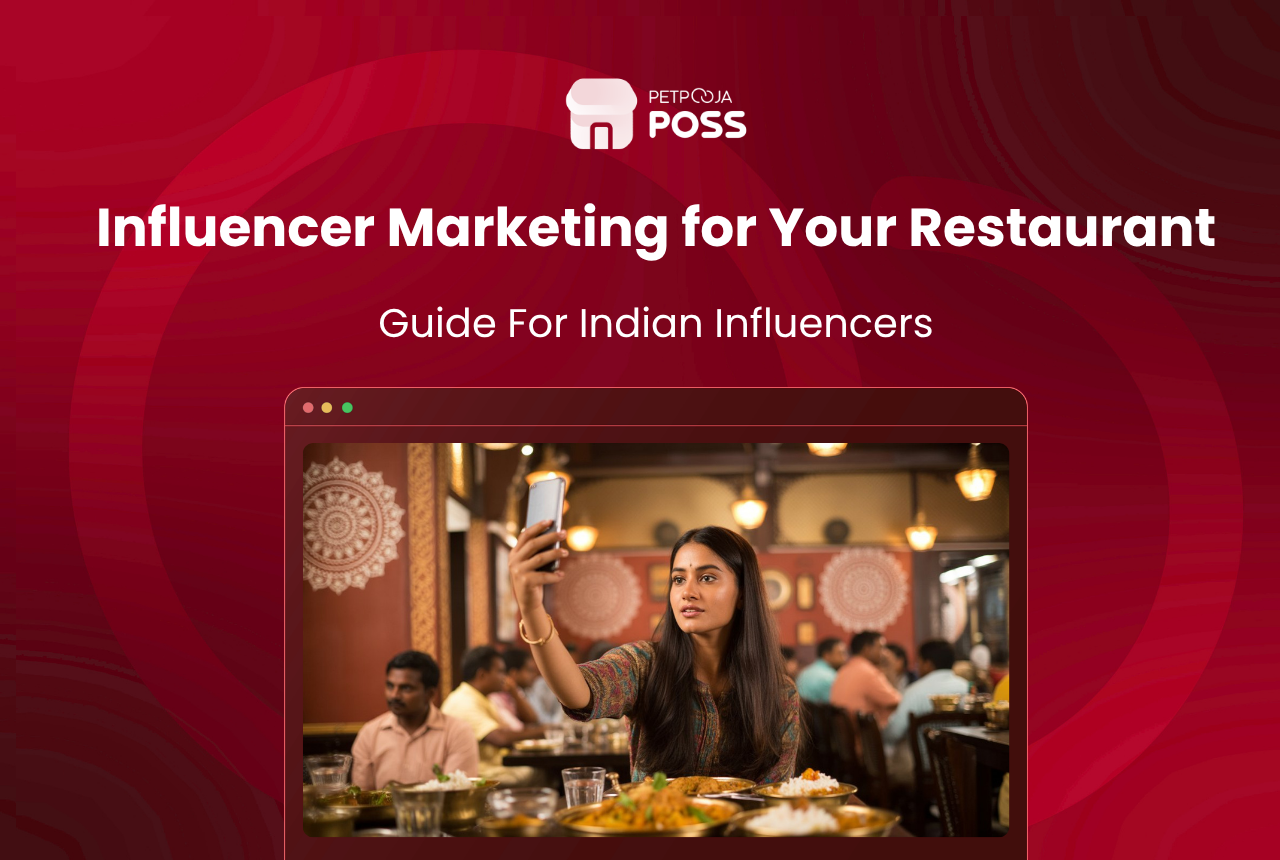
To do influencer marketing for your restaurant, pick 3-5 micro food bloggers in your city (10K-50K followers), offer a complimentary meal plus ₹5,000-₹15,000 per reel, hand them a brief with 2-3 talking points about your signature dishes, and track walk-ins using a unique promo code. Most restaurant owners in India notice a bump in footfall within one week of a well-targeted local collaboration.
A single reel from a local food page can fill more tables in a week than a month of paid ads, and the owners acting on this are pulling ahead. This guide breaks down each step with rupee benchmarks, tested formats, and tracking methods for single-outlet and chain restaurants alike.
Key Takeaways
- Micro and nano food bloggers (under 50K followers) get engagement rates of 4-8%, compared to 1-2% for celebrity accounts, at a fraction of the cost.
- A well-performing Instagram Reel from a local food page can push reservations up by 30% within a week, per IQfluence’s 2026 report.
- Budget ₹3,000-₹15,000 per collaboration for micro creators in Tier-1 Indian cities. Nano bloggers often accept a meal in exchange.
- India’s influencer marketing industry crossed ₹3,375 crore in 2026, growing at 18% CAGR, per EY India.
Why Does Restaurant Influencer Marketing Work in India Right Now?
India crossed 350 million Instagram users by early 2026. A big share of those users browse food reels daily. Industry data from BillFeeds shows that 62% of diners check a restaurant’s social media before picking where to eat. On top of that, 87% of food-related searches on Instagram lead to a restaurant visit within 48 hours.
In other words, there is a direct line from a diner’s phone screen to your table.
Here is a quick example. A food creator with 25,000 followers in Koramangala, Bangalore, shoots a 30-second reel of your butter chicken. At a 3% engagement rate, about 750 people interact with the post. If just 5% of them visit over the next two weeks, you get 37 new covers from one piece of content that cost you a meal and ₹7,500.
At Petpooja, we have seen owners across 1,00,000+ outlets pair creator collaborations with their Swiggy and Zomato integration to fill tables during off-peak hours. The ones who do this tend to convert online discovery into both dine-in and delivery orders.
How Do You Pick the Right Platform for Your Restaurant Type?
Instagram Reels is the primary platform for cafes, bakeries, and fine-dining restaurants in India, while QSRs and street food chains benefit from pairing Instagram with YouTube Shorts. Cloud kitchens that rely on delivery should combine Instagram food page reviews with aggregator platform ratings for both social proof and discoverability.
Here is a match-up table:
| Outlet Type | Best Platform | Reason |
|---|---|---|
| Cafes, bakeries, fine dine | Instagram Reels | Visual food shots perform best here |
| QSRs, street food, regional chains | Instagram + YouTube Shorts | Short-form video grabs younger audiences fast |
| Pubs, breweries, nightlife spots | Instagram Stories + YouTube | Vibe-driven footage works in longer formats |
| Cloud kitchens (delivery only) | Instagram + delivery app reviews | You need social proof and platform ratings both |
For instance, a biryani cloud kitchen in Madhapur, Hyderabad, gains more from a local Instagram food page than from a YouTube long-form review. On the other hand, a fine-dine spot in Bandra, Mumbai, might want a YouTube walkthrough showing the plating and the ambience.
Stick to one primary platform and one backup. Do not scatter a ₹20,000 monthly budget across five channels.
How Do You Find Food Creators Who Actually Drive Footfall?
The biggest mistake owners make is chasing follower counts. A food page with 5 lakh followers but 0.8% engagement moves fewer diners than a neighbourhood creator with 15,000 followers and 6% engagement.
Here is how to shortlist:
- Search city hashtags. Try #PuneFood, #ChennaiEats, #AhmedabadFoodie, or #DelhiFoodWalks on Instagram. Creators who show up repeatedly are the active ones in your area.
- Check engagement, not vanity numbers. Open the last 10 reels. Divide average likes plus comments by follower count. Anything above 3% is solid.
- Read the comments. If people ask “where is this?” or “address please?”, that creator drives real intent. If comments are just emojis from other pages, the audience is not nearby.
- Review past collabs. Did the outlet they featured last month get a spike in tagged posts from new visitors? Check the outlet’s tagged photos before and after the collab date.
Across 1,00,000+ clients, we have noticed that owners who pick 3-4 hyper-local creators over one large account report better walk-in numbers per rupee spent. If you want a deeper look at building your restaurant’s social media marketing plan, we have a separate guide for that.
What Should Your Budget Look Like in Real Rupee Terms?
Indian pricing for food creators varies widely. Below are 2025-26 benchmarks, based on data from TopInfluencersIndia:
| Blogger Tier | Follower Range | Typical Fee Per Post/Reel | What You Get |
|---|---|---|---|
| Nano | 1,000-10,000 | ₹0 (meal exchange) to ₹5,000 | Hyper-local reach, high trust, 5-8% engagement |
| Micro | 10,000-1,00,000 | ₹5,000-₹1,50,000 | City-level reach, solid conversion, 3-6% engagement |
| Macro | 1,00,000-10,00,000 | ₹2,00,000-₹8,00,000 | State or national reach, lower engagement, brand play |
| Celebrity | 10,00,000+ | ₹10,00,000+ | Mass awareness, very low conversion per rupee |
For a single-outlet eatery with ₹25,000-₹40,000 per month for marketing, the sweet spot is 2-3 micro creators plus 1-2 nano pages. That gives you 4-5 pieces of fresh material each month across different audience pockets.
As a result, a QSR chain owner in Surat running 6 venues might set aside ₹15,000 per branch per month and rotate different local creators for each location. This keeps the content hyper-local to each neighbourhood.
How Should You Brief the Creator?
A restaurant influencer brief should cover the dishes to feature, one key message, the call to action with hashtag and promo code, the content format, and a posting window within 48 hours of the visit. ASCI guidelines in India require disclosure labels like #ad or #sponsored on all paid food collaborations, so build that into the brief from the start.
A vague “just come and shoot something” instruction leads to vague footage. Instead, give every collaborator a one-page brief covering:
- 2-3 dishes to feature (your highest-margin or most photogenic items)
- One key message (new menu launch, weekend brunch deal, festive special)
- Call to action (tag your handle, use a specific hashtag, or share a promo code)
- Format (reel under 30 seconds, story series, or a static carousel)
- Posting window (within 48 hours of the visit, ideally Thursday or Friday evening before the weekend rush)
That said, do not script the creator word for word. The whole point of this type of promotion is that it sounds like a genuine suggestion, not a television ad. Hand them the talking points and let them deliver in their own voice.
The ASCI guidelines for paid promotion in India lay out the exact disclosure formats accepted by the regulator, so review them before your first collaboration goes live. For more on how to build a social media calendar around these collaborations, see our planning guide.
What Are the Best Campaign Formats for Restaurants?
The five tested formats for restaurant influencer marketing in India are complimentary meal reviews, promo code collaborations, menu launch exclusives, Instagram takeovers, and contest or giveaway partnerships. Mix and match based on what your outlet needs most.
Format 1: The Complimentary Meal Review. Invite the creator for a free meal. They post an honest review. This is the cheapest entry point and pairs well with nano accounts. A cafe owner in Aundh, Pune, ran this with 4 local food pages in March 2026 and saw a 22% jump in weekend footfall within two weeks.
Format 2: The Promo Code Collab. Give the creator a unique discount code (say, “FOODIE15” for 15% off). Every redemption is directly traceable. This is how you pin down exact ROI.
Format 3: The Menu Launch Exclusive. Before rolling out a new menu, invite 2-3 creators for a private tasting. Their footage builds anticipation, and the exclusivity makes them more enthusiastic about the feature.
Format 4: The Instagram Takeover. Hand your venue’s Instagram to a creator for 24 hours. They post stories showing the kitchen, the prep, the plating, and the service. This format builds trust because it feels unfiltered and raw.
Format 5: The Contest or Giveaway. Partner with a content creator to run a “tag two friends and win a dinner for two” contest. This is the fastest way to grow your own follower base. The creator gets engagement; you get new followers and foot traffic. To get more ideas on building your restaurant’s Instagram following, check our detailed playbook.
How Do You Track Results That Actually Matter?
Do not measure a campaign by likes alone. Here is what to track and how:
- Promo code redemptions. The most direct ROI metric. If you gave out “FOODIE15”, check how many times it was redeemed in your Petpooja POSS billing system. The coupon tracking feature logs every use on its own.
- Walk-in spike. Compare your covers for the 7 days after the post goes live versus the 7 days before. A 15-20% uplift is a strong outcome for a micro creator partnership.
- Profile visits and follower growth. Check your venue’s Instagram Insights for the week after the collab. A solid dining reel should bring in 200-500 new profile visits.
- User-generated posts. Did new diners visit, snap photos, and tag your outlet? That is the compounding effect: one paid post sparks multiple organic posts.
The average ROI for local food creator partnerships is roughly 8x, meaning every ₹1 spent brings back ₹8 in revenue, as per the IQfluence report mentioned earlier. Even at half that, a ₹10,000 collab pulling in ₹40,000 of added revenue is a strong return.
Common Mistakes to Avoid
The top mistakes Indian restaurant owners make with influencer marketing are chasing follower counts without checking geographic audience overlap, skipping the written brief, ignoring ASCI paid-promotion disclosure rules, running one-off posts instead of recurring partnerships, and failing to track walk-in attribution. Here is what each looks like in practice:
- Chasing follower counts alone. A creator with 2 lakh followers in Delhi adds no value if your eatery is in Vastrapur, Ahmedabad. Always verify geographic audience overlap first.
- Skipping the written brief. Without clear deliverables, you end up with footage that skips your outlet name, your location, or your best dishes. Write it down.
- Ignoring ASCI disclosure rules. Undisclosed paid posts can draw regulatory action and harm your credibility with diners who feel misled.
- Running one-off partnerships. A single post fades in 48 hours. Build ongoing ties with 2-3 creators who become regulars at your venue. Over time, their audience links them to your brand. For a broader look at restaurant marketing approaches, our guide on food photography for marketing covers the visual side.
- No tracking at all. If you cannot attribute even one walk-in to a partnership, you are guessing, not marketing. Use promo codes, reservation links, or a simple “how did you hear about us?” question at the billing counter.
Conclusion
Influencer marketing for restaurants in India is no longer optional for venues that want to stay visible. With 62% of diners checking social media before choosing where to eat, the winning approach is straightforward: pick 3-5 local micro creators in your city, hand them a clear brief, set a monthly budget of ₹15,000-₹40,000, and track results through promo codes and reservation data.
Start with complimentary meal reviews. Graduate to paid reels once you know which creators drive real footfall. Build long-term ties with the ones who deliver. The eateries that treat this as a recurring channel rather than a one-off experiment are the ones filling tables week after week.
Frequently Asked Questions
For a single-outlet eatery in a Tier-1 city, plan for ₹15,000-₹40,000 per month. Nano creators (under 10K followers) often work for a free meal, while micro creators charge ₹5,000-₹15,000 per reel. A multi-outlet chain might spend ₹1,00,000-₹2,00,000 monthly across branches.
Go with several small ones. Micro and nano creators in your city deliver 4-8% engagement, compared to 1-2% for celebrity accounts. Their audience trusts them more because the feel is personal rather than sponsored. Splitting your budget across 3-5 neighbourhood pages gives wider coverage.
Search city-specific hashtags on Instagram: #MumbaiFoodie, #BangaloreEats, #DelhiFoodGuide, #ChennaiFood, #PuneFoodLovers. Look for pages that post regularly, attract genuine comments (not just emojis from other creators), and feature venues similar to yours. Platforms like Modash or TopInfluencersIndia also publish curated city-wise lists.
The simplest way is a unique promo code per creator. Track redemptions through your billing system. Also compare walk-in counts for the week before and after the collaboration. With Petpooja POSS, the coupon tracking feature logs every redemption and gives you exact conversion numbers without manual counting.
They do different things and pair well together. Creator posts build trust and social proof because a real person is recommending your dishes. Instagram ads give you precise targeting and scale. In practice, many owners run the creator’s reel as a paid ad (with permission), combining the authenticity of genuine footage with the reach of paid distribution.