
Restaurant loyalty programmes come in seven shapes, and what separates them is what the reward is based on. Points go on the bill. Stamp cards go on the number of visits. Cashback hands back a share of what was spent.
Tiers go on total spend over a period. The last three run on a fee the guest pays upfront, on a single dish, or on a guest who brings somebody new.
What decides the right one for you is how often the same guest comes back. A tea shop in Aundh sees the same face most days. A wedding-season banquet hall sees them twice a year. A scheme built on the wrong basis is the one that quietly fades.
This guide sets out the seven types and which restaurant format each suits. It also covers what each one costs you once the reward is handed over, and the Indian rules on the discount line and the SMS that most guides skip.
Key Takeaways
- Start with what the reward is based on, not the reward itself.
- Then match that to how often guests return and what they spend.
- Next, price the reward as a dish, once your accountant has checked the tax. ₹50 off costs you ₹50; a ₹50 dessert costs about ₹15.
- And budget for every point you issue, not only the ones claimed.
What Does a Restaurant Loyalty Programme Do for Your Outlet?
A restaurant loyalty programme is a standing offer that rewards a guest for coming back, and it does two jobs. This section covers both, because the first is the one people set the programme up for and the second is usually the one that pays.
The obvious job is the return visit. You give a reason to choose you over the place two doors down, and you give it before the guest has to decide.
The quieter job is the customer list. Every enrolment attaches a phone number to a bill. After six months you know who eats what, who stopped coming, and who spends twice the average. A cash bill on its own tells you none of that.
In our view the second job is the one worth setting the programme up for, because it keeps paying even when the reward turns out to be wrong. Our restaurant loyalty programme guide goes deeper on the strategy behind both.
Scale is part of why this matters now. Organised brands hold 45% to 50% of India’s food services market, on Redseer’s own figures published in September 2026. That is a lot of branded competition for the same regular, and an anonymous bill leaves you nothing to ask them back with.
The 7 Types of Restaurant Loyalty Programme
That basis is the real design decision, so read the second column first. Then decide which row describes how your guests actually behave.
| Type of restaurant loyalty programme | What the reward is based on | What the guest gets |
|---|---|---|
| Points on bill value | The size of each bill | A share of past bills back as money off |
| Stamp card | The number of visits | A free item on the Nth visit |
| Cashback wallet | A fixed share of each bill | Wallet money usable on the next bill |
| Tiered | Total spend over a period | Better benefits at each level |
| Paid membership | A fee paid upfront | Standing benefits for the term |
| Item-based | Units of one dish | That dish free after a set count |
| Referral | New guests introduced | A reward to both sides |
Each one is set out below, in the order most restaurants should consider them.
1. Points on Bill Value
The guest earns points worth a small share of every bill, then spends them as a discount later. A 5% programme on a ₹800 bill credits ₹40.
This is the default for a reason. It scales with the bill, so a guest who spends more earns more, and your biller does nothing beyond entering a phone number.
It is also the type with the weakest pull on a small bill. ₹40 is not a reason to come back on Thursday. A balance only starts to shape where somebody eats once it is worth a few hundred rupees, and on ₹800 bills that is eight visits away.
2. Stamp Card
Count visits, not rupees. Nine coffees, tenth free. The card is usually digital now, but the logic is the one your local bakery has run for thirty years.
A stamp card suits a small ticket and a frequent visit, because the guest can see the finish line. Seven of ten stamps filled tells them how close they are at a glance. A points balance of the same worth does not.
The trap is that it rewards the cheapest order. A guest who buys only filter coffee reaches the tenth cup as fast as one who buys coffee and a sandwich every time.
3. Cashback Wallet
Cashback is points with the arithmetic already done for the guest. A fixed share of the bill goes back into a wallet they can spend next visit, and it is shown in rupees from the start. ₹60 in a wallet, not 600 points they have to work out the value of.
That clarity is the whole advantage, and it is why delivery-led brands lean on it. We have set out the trade-off in full in our points vs cashback comparison.
4. Tiered
Guests move up levels as their spend accumulates, and each level carries better benefits. Silver at ₹10,000 a year, gold at ₹30,000, something worth having at the top.
Tiers work where the ticket is large, because status is worth more to that guest than a small discount.
A fine-dining room in Lower Parel sees a regular six times a year. Those six bills clear a silver tier easily. The same six bills under a points scheme hand back a discount that guest was never going to plan a visit around.
Keep the number of tiers to about three. Past that your floor staff struggle to say what each level gets, and a benefit nobody can explain is a benefit nobody claims.
5. Paid Membership
A café chain in Vastrapur sells a ₹999 card that takes 15% off every visit and includes free delivery (an example). It has sold a year of loyalty before serving anything. That is a paid membership: the guest pays upfront and gets standing benefits for the term.
Two things have to be true before this works. Your regulars must already be regular, and the benefit must be worth more than the fee to someone who visits at their normal rate. If you have to hope guests underuse it, you have sold a bad product.
6. Item-Based
Put the reward on one dish instead of on the bill or the visit. Every sixth biryani free. This is the type to reach for when a single dish is what people come to you for.
Pick a dish that is both ordered often and cheap to make. Your signature dish is often the one with the thinnest margin. Put the reward on that and the scheme starts losing money on the guests it is meant to keep.
7. Referral
Both sides get something when an existing guest brings a new one. Every other type works on the guests you already have. Referral is the only one that brings you new ones.
It also fails silently more often than the rest, because it asks the guest to act when they are nowhere near your restaurant.
In most formats it belongs alongside one of the other six rather than on its own. The exception is a business where a regular visits only once or twice a year, and that case is covered below. Our post on restaurant loyalty programme ideas has more on how to prompt it.
Which Restaurant Loyalty Programme Fits Your Format?
The match is decided by two numbers you already have: how often a regular returns, and what they spend when they do. This table pairs the common Indian formats with the type that suits each.
| Restaurant format | How often a regular returns | What they spend a visit | Loyalty programme that fits |
|---|---|---|---|
| Tea shop, bakery, juice counter | Most days | Small | Stamp card |
| QSR and fast food | Two or three times a week | Small | Points, plus item-based on one repeat-order dish |
| Café | Two or three times a month | Medium | Points or cashback |
| Casual dine-in | Monthly | Medium | Cashback wallet |
| Cloud kitchen | Monthly, mostly delivery | Medium | Cashback, on direct orders |
| Multi-outlet chain with regulars | Weekly | Small to medium | Paid membership |
| Bar and pub | Weekly in season | Large | Tiered |
| Fine dining | A few times a year | Large | Tiered |
| Banquet and catering | Once or twice a year | Very large | Referral |
Three rows in that table need a word of explanation.
Fast food is the clearest case for running two types together. Points on the bill reward the guest who orders more. A reward on one repeat-order dish gives the twice-a-week guest a finish line that points alone will not give them on a ₹150 order.
Pick that dish on margin, as the item-based section sets out, not on fame.
That pairing only works on one sign-up and one phone number. Two schemes with two sign-ups is two things for your biller to remember, and the second one gets skipped.
Cloud kitchens can usually only run this on direct orders. An order through an aggregator often carries no phone number you can use, so there is nothing to credit the reward against. Several kitchens turn that limit into the argument for ordering direct.
A banquet hall should not run points at all. Two bookings a year will never build a balance. On a wedding booking the discount is a negotiation, not a programme. Referral is the exception mentioned in the referral section above, and this is the format it exists for.
What Does a Restaurant Loyalty Programme Cost You to Run?
The cost of a loyalty programme is not the software fee. It is the reward, and what the reward costs you depends on whether you hand over money off or a dish.
Money off comes straight out of your takings. A free dish costs you only its ingredients, which on most menus is around a third of the price printed against it. It varies a lot by dish, and some carry far more.
That share is called the food cost ratio. Our food cost guide has the formula for working out your own.
The reward looks the same on the guest’s side either way. On your side it does not, which makes this the cheapest change in programme design. The one thing to settle first is the tax treatment, covered further down.
Now size the whole thing. Take a café billing ₹4,20,000 a month and running points at 5% (an example). Assume 6 in 10 points issued eventually get used, and replace that assumption with your own figure once you have one.
- Points issued in the month: ₹21,000
- Points that eventually get used, at 6 in 10: ₹12,600
- Points that expire unused: ₹8,400
- What the used points cost you as money off: ₹12,600
- What the same points cost you as dishes, at a 30% food cost ratio: ₹3,780
The same programme, the same guests, and a gap of ₹8,820 on one month of billing.
Our restaurant loyalty ROI calculator runs this on your own figures. If you do not know your food cost ratio yet, the profit margin calculator will work it out for you.
What the Points You Issue Still Cost You
Here is the part almost no guide mentions. Points that expire before anyone claims them are called breakage, and in the example above that is the ₹8,400.
The catch is that on the day you issue them, all ₹21,000 are a reward you have promised. Which points turn into breakage, and which week the rest get spent, is your guests’ decision rather than yours.
A loyalty platform will usually quote you a breakage figure when it pitches. We could not trace any published Indian benchmark to a primary source. So treat a quoted number as a starting assumption, and replace it with your own after three months.
The timing is what catches people out. Balances build through the Diwali and wedding-season rush, then get spent in a slow February, which is the opposite of when you can afford to give margin away.
Two settings keep that in hand. Set an expiry, and cap what a guest can redeem against a single bill. Both are ordinary configuration, not custom work.
How Does a Restaurant Loyalty Programme Work at the Counter?
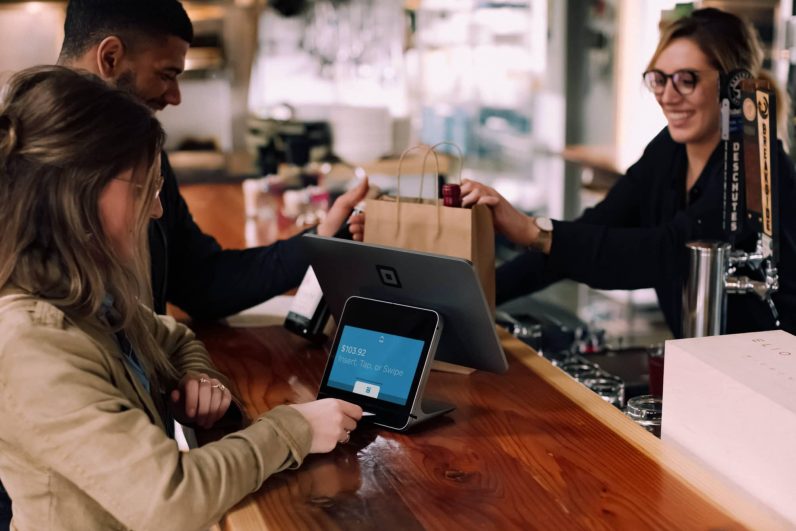
Most international guides describe an app the guest downloads. In India the usual flow has no app in it at all. Your biller types a phone number at the start and an OTP at the end, and everything between those two is the system’s job.
Here is the whole sequence:
- The biller enters the guest’s phone number on the billing screen.
- Points are credited against that bill, at whatever rate you set.
- An SMS confirms the new balance before the guest leaves.
- On a later visit, redemption sends an OTP to that number, where the system uses one.
- The discount prints on the bill as its own line.
Three details in that flow matter more than they look.
No app, no card, no form. The phone number is the loyalty account. A guest who has never heard of your programme is enrolled by the biller asking for a number.
That is why it works. India had 1,207.59 million active mobile connections in August 2026, on TRAI’s own count, so almost every guest already carries the only credential the programme needs. An app has to be downloaded first.
Ask while the card machine is still printing. That is the only point in the transaction when the guest is standing still.
The OTP is a control, not a courtesy. Where the system supports it, redemption sends a one-time password to the guest’s phone. The biller cannot complete the discount without it. That is what stops a balance being drained at the counter without the guest knowing.
Check whether the platform you pick does this, because not all of them do.
The programme lives in the billing system, not beside it. If loyalty sits in a separate tool, someone has to key the bill twice. The two records drift apart as soon as somebody is busy.
Restaurants we work with on Petpooja tell us the reward gets all the attention and the biller decides the outcome.
The outlets that ask for the number on every bill build a list quickly. The ones that ask only when the queue is short build it slowly, then conclude the programme does not work.
None of that is survey data. It is what owners say when the conversation turns to why a scheme they paid for never built a list.
Indian Rules a Restaurant Loyalty Programme Must Follow
Two Indian rules apply to a loyalty programme, and neither appeared in any of the international guides we read for this post. This section covers what each one asks of you, in the government’s own wording.
The Discount Has to Be on the Invoice
Section 15(3) of the CGST Act 2017 deals with discounts. It says the value of a supply:
“shall not include any discount which is given before or at the time of the supply if such discount has been duly recorded in the invoice issued in respect of such supply”
That text sits in the CGST Act published by CBIC.
In practice that means the redemption should be printed on the bill as a discount line, on the same bill the guest pays. Do that, and GST applies to what is left after the discount. Handle the reward outside the bill, and the wording quoted above stops applying.
A free item is a different question from a discount, and the treatment is not settled the same way. Put that one to your accountant before you build the scheme around it rather than after.
Your Reward SMS Needs a Registered Header
Every “you have earned 40 points” message counts as a commercial message, and India does not let a business send those from an unregistered number. The rules sit in the Telecom Commercial Communications Customer Preference Regulations (TCCCPR), which TRAI issues.
TRAI’s own guidance asks for three things. Register your business as a Principal Entity. Send only through a registered header, which is the short sender name a guest sees instead of a phone number. And register the wording of each message you intend to send, which is called a content template.
The practical effect is a wait. The header and the wording of your earn and redeem messages both have to be approved before the first message can go out.
So start that paperwork before you announce the programme, not after. If your SMS provider is doing the registration for you, get written confirmation that it is done.
WhatsApp does not run on this system. It has its own approval queue for message wording, run by whoever supplies your WhatsApp business account, and it has to be started separately.
Where Do Restaurant Loyalty Programmes Go Wrong?
Picking the wrong type is the failure this whole post has been about so far. Four more stall a programme that was set up correctly, and this section names all four so you can check yours against the list.
The first reward is too far away. A balance worth planning a visit around takes a while to build. Claiming something small should not.
This bites hardest where the guest cannot see their progress. On a points or cashback scheme, if there is nothing claimable inside five or six visits, lower the threshold on the smallest reward rather than raising the earn rate.
A stamp card can ask for ten visits and still work, because the guest watches the stamps fill. Nobody believes in a programme they have never redeemed from.
The reward trains people to wait. A standing discount that applies to everything teaches your regulars to hold off until they have enough balance, and to order less in between. Putting the reward on a specific dish, or setting a minimum bill before anything is earned, keeps it pointed at the behaviour you actually want.
Nobody tells the guest their balance. A balance the guest cannot see is a balance they will not come back for. The message after each bill is the only thing keeping the programme in their head between visits.
Your regulars get rewarded for what they already do. This is the uncomfortable one. Your Tuesday regular was coming on Tuesday anyway, and a points programme hands them money off a visit you already had.
The money is better spent on the guest who came twice and stopped. That is what a lapsed-guest campaign is for, and our post on customer retention strategies covers how to find that group in your own data.
If I Were Starting a Restaurant Loyalty Programme Tomorrow
I’d keep the first one simple: points at 3-5%, redeemed as dishes rather than money off the bill.
It’s the easiest version for billing staff to get right on day one, the guest doesn’t have to decide anything, and it quietly builds the phone number list that everything else depends on. Tiers, memberships and referrals all work better once you can see six months of who actually comes back.
One exception. If people visit most days (a tea counter, a bakery), start with a stamp card instead. On small bills a points balance takes too long to feel like it’s going anywhere.
Worth deciding which type you want before you start looking at platforms. Most will run whichever you pick, so the choice is yours to make early rather than during a demo.
Which Software Runs a Restaurant Loyalty Programme?
Four platforms that sell loyalty into Indian restaurants, with what each one’s own product page says it does. None of them decides the mechanic for you, which is why the type comes first and the shortlist second.
| Platform | Mechanics its own page names | Channels its own page names |
|---|---|---|
| Petpooja Loyalty | Loyalty and cashback points, virtual wallet, point expiry, OTP-regulated redemption | POS-generated SMS |
| Reelo | Points-based, visit-based and spend-based rewards, tiered membership, referral | WhatsApp, SMS, email, automated campaigns |
| Restroworks CRM | Points, rewards and coupons | SMS, email, WhatsApp, automated campaigns |
| Bingage | Cashback, points, referral, VIP tiers | Campaigns, channel not specified |
Two things are worth reading off that table before you book a demo.
The first is that the mechanics are not interchangeable between vendors. If you have decided on a stamp card, a platform whose page only names points and coupons is going to need a workaround. If you want tiers, only two of the four say they do tiers.
The second is the channel column. A reward nobody is told about does not get redeemed. The channel the platform sends on decides what that notification costs, and whether it needs a registered SMS header under the TRAI rules above.
On our own: Petpooja runs points and cashback points against a virtual wallet. They are credited on each bill from the POS and redeemed through an OTP, with SMS from the POS and an expiry you set. It does not run tiers, paid memberships, referral or stamp cards, and it does not send on WhatsApp. If the type you picked in the table earlier is one of those, say so to whoever demos it to you.
Feature lists were read off each vendor’s own product page on 1 October 2026. Confirm against the vendor before you sign anything, because these pages change.
Conclusion
Two numbers decide which of the seven suits you: how often a regular returns, and what they spend. Daily visits on a small bill point to a stamp card. Large bills from a returning guest point to tiers. In between, where most restaurants sit, it is points or cashback. The once-a-year booking is referral.
There are three things to settle before you launch. The first is what the reward is based on. The second is what it costs you as a dish rather than as money off. The third is the SMS registration, which needs starting before you announce the programme.
Then keep the programme where the bill is raised. A loyalty scheme that lives inside your restaurant POS credits and redeems on the same screen your biller is already using.
Your list then grows on every bill, instead of growing only on the bills somebody remembered to ask about.
Frequently Asked Questions
Give it a full season, and judge it on enrolments first rather than on redemptions. If most bills are collecting a phone number by the end of month two, the programme is working even if nobody has redeemed yet. If they are not, the problem is at the counter and no change to the reward will fix it.
They sit against that account until the expiry you set, then they lapse. 90 and 180 days are both common settings. We have not found an Indian rule fixing the expiry on a restaurant’s own scheme, so treat it as your commercial call. Ask your accountant how the lapsed value gets recorded, and publish the expiry where guests can see it.
Not through the aggregator, because those orders often arrive without a phone number you can use. Some restaurants put a printed card in the packaging instead, offering the reward on a direct order. That turns the gap into a reason to order from you next time.
Rarely at the start. It needs guests who already visit often enough that the fee looks like a bargain to them. You cannot identify that group until a simpler programme has run for a few months. Our guide to starting a loyalty programme sets out the sequence.
Compare them on three things. How deeply they sit in your billing system, whether redemption makes the biller leave the billing screen, and what the campaign tools cost on top. Our guide to restaurant loyalty software compares what is available in India. Read it once you have picked the type of programme you want.








