


Over the last few years, India’s cafe culture has grown quietly but steadily. What was once limited to large cities is now visible in smaller towns too. Independent coffee shops, specialty cafés, and compact takeaway counters are opening across the country.
If you’re planning to start one, the biggest early decision isn’t branding or menu design, it’s choosing the right coffee shop equipment. The machines you invest in will directly affect speed, taste consistency, operating cost, and even staff workflow.
This guide walks through the essential coffee shop equipment needed in 2026. We’ll look at different types of coffee machines, realistic price ranges, setup cost estimates, and practical buying considerations. Whether you’re setting up a small neighbourhood café or planning a larger commercial outlet, this will help you plan equipment decisions with clarity.
This equipment guide is based on standard café formats commonly used in India. Pricing and machine categories may differ by brand, automation level, and market conditions. The ranges shared here are practical estimates drawn from typical commercial setups.


Essential Coffee Shop Equipment List (2026 Updated)
Setting up a café isn’t just about buying a coffee machine. A well-run outlet depends on multiple pieces of equipment working together, from brewing to milk preparation to storage and layout.
Here’s a practical breakdown of the essential coffee shop equipment required in 2026.
A. Brewing Equipment
This is the core of your setup. The type of machine you choose will define your speed, output, and menu possibilities.
1. Espresso Machine
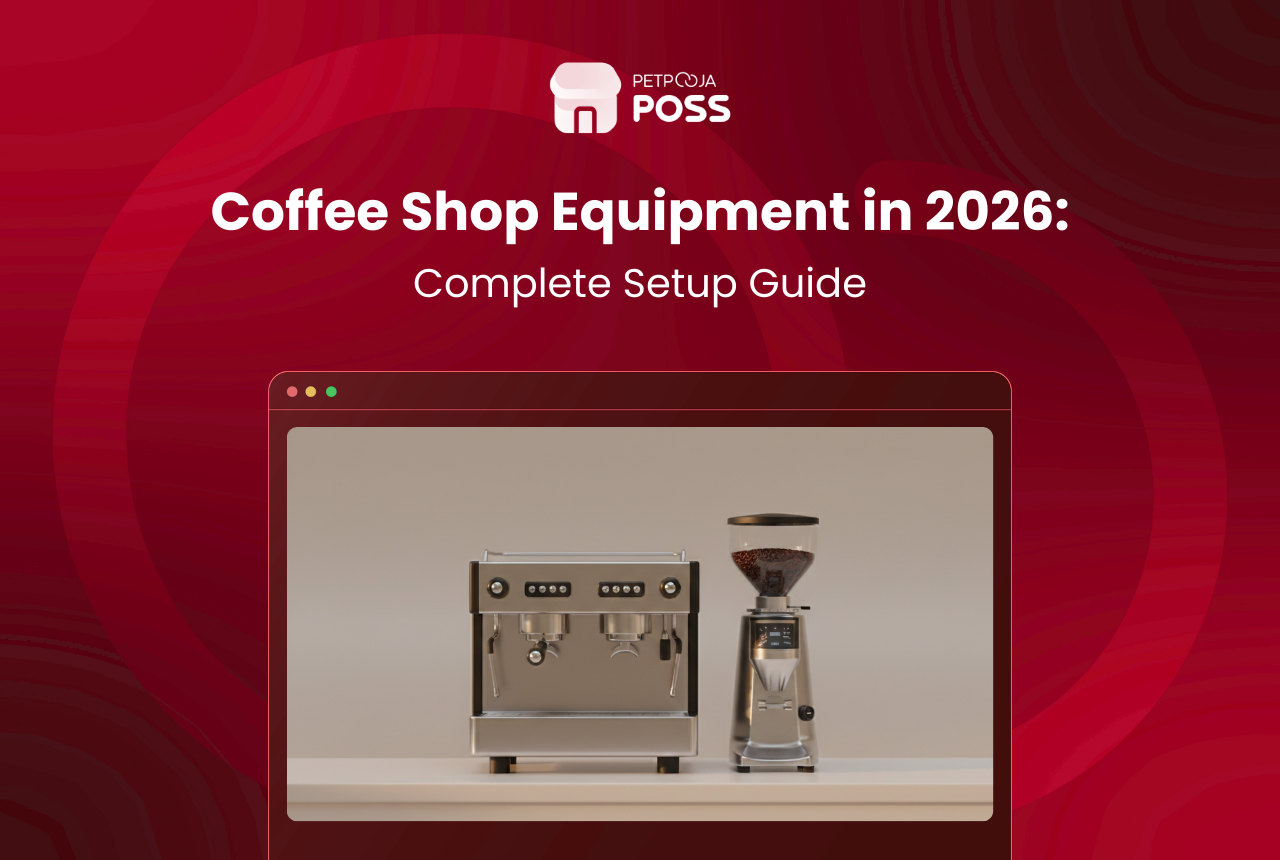
An espresso machine is the backbone of most cafés. It allows you to prepare espresso shots that form the base for cappuccino, latte, americano, and other beverages.
For commercial use, prices typically range from ₹60,000 for entry-level machines to ₹4-5 lakh for high-capacity models.
2. Commercial Coffee Machine
A commercial coffee machine is built for consistent, high-volume output. These are suitable for cafés expecting steady footfall throughout the day.
Unlike home machines, they are designed for durability, heat stability, and continuous operation.
3. Industrial Coffee Machine
Industrial coffee machines are used in very high-demand environments, large chains, corporate cafeterias, or production-level setups.
They are bulkier, more powerful, and priced higher than standard commercial machines.
4. Automatic Coffee Machine (Fully Automated)
An automatic coffee machine handles grinding, brewing, and milk frothing with minimal manual input.
Automatic coffee machine price in India usually starts around ₹70,000 and can go up to ₹3 lakh or more depending on capacity and features.
These machines are ideal for quick-service cafés or outlets with limited trained baristas.
5. Moka Coffee Maker
Though more common in smaller cafés or specialty outlets, a moka coffee maker can be useful for serving strong, Italian-style coffee.
It’s affordable and suitable for limited-batch brewing.
6. French Press Coffee Maker
A french press coffee maker is often used in specialty cafés offering manual brew options.
It doesn’t replace an espresso machine but adds variety to your menu.
7. Filter Coffee Pot
For cafés serving South Indian filter coffee or drip-style brews, a filter coffee pot is essential.
It is simple equipment but remains highly relevant in certain regions.
B. Grinding Equipment
8. Coffee Grinder
No matter how advanced your machine is, coffee quality depends heavily on grind consistency.
There are two main types:
- Burr grinder – Preferred for cafés due to uniform grind size
- Blade grinder – Cheaper but less consistent
A good commercial coffee grinder typically ranges between ₹15,000 and ₹1.5 lakh depending on output capacity.
For serious café setups, investing in a reliable grinder is just as important as choosing the right espresso machine.
C. Milk & Beverage Preparation
9. Electric Milk Boiler
An electric milk boiler helps maintain temperature consistency during peak hours.
Prices generally range from ₹5,000 to ₹20,000 depending on capacity.
10. Milk Frother
Used for cappuccinos and lattes, milk frothers create texture and foam. Some espresso machines include built-in steam wands, but standalone frothers are common in certain setups.
11. Coffee Mixer Machine
In some café formats, especially those offering cold coffee variations, a coffee mixer machine or blender becomes necessary.
D. Storage & Utility Equipment
Behind the counter, several support systems keep operations smooth:
- Refrigerator for milk and perishables
- Ice machine for cold beverages
- Water purifier (essential for coffee quality)
- Airtight storage bins for beans and powders
Water quality, in particular, directly affects taste and machine longevity.
E. Coffee Shop Furniture
Equipment is only half the setup. The experience also depends on layout and seating.
Essential coffee shop furniture includes:
- Service counter
- Barista workstation
- Tables and chairs
- Display racks
- Storage cabinets
Layout planning matters. Machines should be placed to reduce unnecessary movement and improve service speed.

Coffee Machine Types Explained (For Commercial Use)
When people start comparing coffee machines, they usually look at price first. That’s normal. But price alone doesn’t tell the full story.
Different machines are built for different kinds of shops.
Espresso Machine vs Automatic Coffee Machine
An espresso machine gives more control. The barista handles most of the work, grinding, pressing, timing. This is common in specialty cafés where taste and texture matter a lot.
An automatic coffee machine does most of that on its own. You press a button, and it handles the rest. These machines are useful in places where speed matters more than manual skill.
Automatic coffee machine price usually starts from around ₹70,000 and goes higher depending on size and features.
If you have trained staff and want more control over flavour, an espresso machine works well. If you want faster service with fewer manual steps, automatic machines help.
Commercial Coffee Machine vs Industrial Coffee Machine
A commercial coffee machine is what most regular cafés use. It can handle daily orders without trouble.
An industrial coffee machine is different. It’s built for very heavy usage. Think large hotels, big chains, or places serving hundreds of cups every hour.
Industrial coffee machine price is much higher. But it’s built to handle serious volume.
The difference isn’t about looks. It’s about how much pressure the machine can handle every day.
Manual, Semi-Automatic, or Fully Automatic?
Manual machines need more skill. The barista controls almost everything.
Semi-automatic machines give some control but manage pressure and water flow on their own.
Fully automatic machines handle most steps internally.
Small cafés often choose semi-automatic machines. Large outlets or chains may prefer fully automatic machines because they reduce dependency on staff skill levels.
Before choosing, think about how many cups you expect to sell per hour. That number matters more than trends.
Which Machine Suits Your Cafe?
If you are setting up a compact neighborhood cafe with 20-30 seats, a solid commercial espresso machine paired with a reliable coffee grinder is usually enough.
If you expect high daily footfall or operate multiple branches, investing in a higher-capacity commercial coffee machine or a fully automatic setup may make more sense.
The right choice depends less on trend and more on projected orders per hour, staff capability, and menu design.
Coffee Machine Price in India
Before finalising your coffee shop equipment list, it helps to understand how much coffee machines actually cost in India.
Prices vary depending on size, automation level, and daily output. A small café doesn’t need the same setup as a high-volume outlet.
Here’s a realistic breakdown.
Entry-Level Coffee Machine Price (Small Café Setup)
If you’re opening a small café, takeaway counter, or kiosk, basic commercial equipment is enough.
- Espresso machine price: ₹60,000 – ₹1.2 lakh
- Automatic coffee machine price: ₹70,000 – ₹1.5 lakh
- Coffee grinder price: ₹15,000 – ₹40,000
- Electric milk boiler price: ₹5,000 – ₹15,000
This type of setup works well for outlets serving under 150 cups per day.
For most first-time cafe owners, this is where investment starts.
Commercial Coffee Machine Price (Mid-Range Cafe)
If you expect steady daily traffic, you’ll need stronger equipment.
- Commercial coffee machine price: ₹1.5 lakh – ₹3.5 lakh
- Automatic coffee machine price (mid-range): ₹1.5 lakh – ₹3 lakh
- High-capacity coffee grinder: ₹40,000 – ₹1 lakh
This range suits cafes serving 200 – 400 cups daily.
Machines in this category are built for longer operating hours and better heat stability.
Industrial Coffee Machine Price (High-Volume Outlet)
For malls, large chains, or corporate cafeterias, capacity becomes critical.
- Industrial coffee machine price in India: ₹4 lakh – ₹8 lakh or more
- Advanced grinder systems: ₹1 lakh+
Industrial machines are built for heavy, continuous usage. They are more expensive, but downtime in a busy outlet costs more than the machine itself.
What Affects Coffee Machine Price?
Coffee machine price in India depends on:
- Output capacity (cups per hour)
- Boiler size
- Manual vs fully automatic design
- Build quality
- Brand support and servicing
Two machines may look similar, but internal components and durability can differ a lot.
When planning your coffee shop equipment budget, it’s better to think in terms of long-term usage rather than just initial cost.
Coffee Shop Setup Cost in India (2026 Estimate)
Buying coffee machines is only one part of the investment.
When people ask about a coffee shop setup cost, they usually mean the total amount required to open the doors and start serving.
That includes equipment, interiors, licensing, and working capital.
Let’s break it down in simple terms.
1. Equipment Cost
This covers your core coffee shop equipment:
- Espresso or commercial coffee machine
- Coffee grinder
- Electric milk boiler
- Refrigeration
- Ice machine
- Water purifier
For a small café, equipment cost can start around ₹2-4 lakh.
For a mid-sized café with stronger machines, this can go up to ₹5-10 lakh.
Premium or high-volume setups can easily cross ₹12-15 lakh, depending on the industrial coffee machine and additional hardware.
2. Interior and Furniture Cost
Coffee shop furniture and layout also require planning.
This includes:
- Service counter
- Tables and chairs
- Lighting
- Display racks
- Branding elements
Interior cost depends heavily on city and design style.
A small café may spend ₹3-6 lakh.
A larger outlet in a metro city may go well beyond that.
3. Licensing and Registrations
To operate legally, you’ll need:
Licensing costs are smaller compared to equipment but still part of total setup.
Expect ₹20,000 – ₹1 lakh, depending on location and scale.
4. POS System and Billing Setup
Modern cafés rely on billing software and inventory management and tracking.
A Cafe POS system helps with:
- Order management
- Inventory control
- Sales tracking
- Daily reporting
This cost varies based on provider and hardware needs.
5. Initial Inventory and Working Capital
You also need:
- Coffee beans
- Milk
- Syrups
- Cups and packaging
- Staff salaries (first few months)
Working capital is often underestimated. It’s safer to keep at least 2-3 months of operating buffer.
Estimated Total Coffee Shop Setup Cost in India
Here’s a broad estimate for 2026:
- Small cafe: ₹6 -10 lakh
- Mid-sized commercial cafe: ₹12-20 lakh
- Premium / high-traffic outlet: ₹25 lakh and above
These numbers vary by city, rent, and brand positioning.
The main factor isn’t just coffee machine price. It’s how all pieces of coffee shop equipment and operations come together.
Planning capacity properly from the start helps avoid overspending later.
Mistakes to Avoid While Buying Coffee Shop Equipment
Buying coffee shop equipment is exciting. But it’s also where many new café owners make expensive mistakes.
Here are some common ones.
1. Buying Home Machines for Commercial Use
Some new owners try to save money by purchasing home-grade coffee machines.
That usually backfires.
Home machines are not built for continuous use. They overheat, slow down, or break under daily commercial demand.
If you’re opening a café, always choose a commercial coffee machine or industrial coffee machine depending on expected volume.
2. Ignoring the Coffee Grinder
Many people focus only on the espresso machine.
But coffee quality depends heavily on grind consistency.
A weak grinder can ruin the output of even a good machine. Investing in a proper burr coffee grinder is not optional for a serious café.
3. Choosing Low Capacity Machines
If your machine can handle 100 cups a day but you serve 300, you’ll face delays, breakdowns, and unhappy customers.
Always estimate realistic daily volume before checking coffee machine price.
Capacity matters more than saving ₹20,000 upfront.
4. Underestimating Maintenance
Coffee machines need cleaning, servicing, and periodic part replacement.
Ignoring maintenance planning can increase downtime.
Before buying, check:
- Service availability
- Spare parts access
- Warranty terms
5. Not Planning the Workflow
Coffee shop equipment placement affects speed.
If the grinder is far from the machine, or milk storage is not nearby, staff will waste time moving around.
Small layout mistakes slow service more than people realise.
6. Overspending on Features You Don’t Need
Some cafés invest in advanced automation without understanding their menu.
If you serve a limited range of beverages, you may not need a high-end fully automatic system.
Match equipment with your concept.
Not with trends.
Buying the right equipment is less about buying the most expensive machine and more about buying what fits your scale.
Technology You Shouldn’t Ignore in 2026
Coffee shop equipment is important.
But in 2026, machines alone don’t run a cafe.
Many outlets struggle not because of poor coffee quality, but because of weak backend systems.
Here’s what you shouldn’t ignore.
1. POS System for Cafés
A POS system is no longer optional.
It helps with:
- Billing and order management
- Daily sales tracking
- Inventory updates
- Basic reporting
Without a POS system, even small cafes end up depending on manual tracking. That usually creates stock mismatches and billing errors.
For growing cafés, structured billing becomes as important as the coffee machine itself.
2. Inventory Management
Milk, beans, syrups, cups- small leakages add up.
Inventory tracking helps you:
- Monitor daily consumption
- Reduce wastage
- Track supplier costs
- Maintain consistency
Many cafe owners realize too late that profit margins shrink because of untracked usage.
Technology helps prevent that.
3. Recipe Standardization
Taste consistency matters.
If one barista makes a latte stronger than another, customers notice.
Modern systems allow:
- Fixed recipe measurements
- Portion control
- Standard brew settings
This keeps quality stable even when staff changes.
4. Integrated Billing and Reporting
When your POS connects with inventory and reporting, you can see:
- Daily sales
- Peak hours
- Best-selling beverages
- Slow-moving items
These insights help you adjust pricing and menu decisions.
It’s not just about serving coffee.
It’s about running a structured operation.
Equipment Alone Does Not Run a Coffee Shop
Buying the right coffee shop equipment is only one part of the setup. Once the cafe opens, daily operations start to matter just as much as machines.
Order flow, billing accuracy, inventory tracking, and sales reporting all influence how smoothly your outlet runs. Even the best commercial coffee machine cannot fix stock mismatches or manual billing errors.
Most modern cafes use a structured POS system to manage orders, track ingredient usage, and monitor daily performance. Tools like Petpooja POSS can help streamline billing and inventory so owners can focus on service and customer experience rather than backend confusion.
In 2026, successful cafés combine the right coffee shop equipment with smart operational systems. equipment handles brewing. Systems handle business.
Conclusion
Starting a cafe looks simple from the outside. A good location, strong branding, and quality beans. But once operations begin, equipment decisions start to matter more than expected.
The coffee shop equipment you choose affects speed, taste consistency, staff workload, and daily output. A machine that struggles under pressure can slow your entire service. On the other hand, the right setup makes work smoother.
Before investing, think about your expected footfall, menu type, and growth plans. Coffee machine price is important, but capacity and durability matter just as much.
Plan your setup carefully. When equipment matches your business scale, daily operations feel far more manageable.
Frequently Asked Questions
To start a coffee shop basic basic things like an espresso or commercial coffee machine, coffee grinder, electric milk boiler, refrigeration, water purifier, storage units, and billing system are needed. Furniture and interior setup are also required.
Equipment cost for a small cafe usually starts around ₹2 – 4 lakh. Larger commercial setups may require ₹5 – 10 lakh or more, depending on machine type and capacity.
The best machine depends on your expected volume. Small cafés often use commercial espresso machines. High-traffic outlets may require automatic or industrial coffee machines.
Commercial coffee machines are suitable for regular cafe use. Industrial coffee machines are built for very high output environments such as large chains or corporate cafeterias.
Automatic coffee machine price in India usually starts around ₹70,000 and can exceed ₹3 lakh depending on features and capacity.


