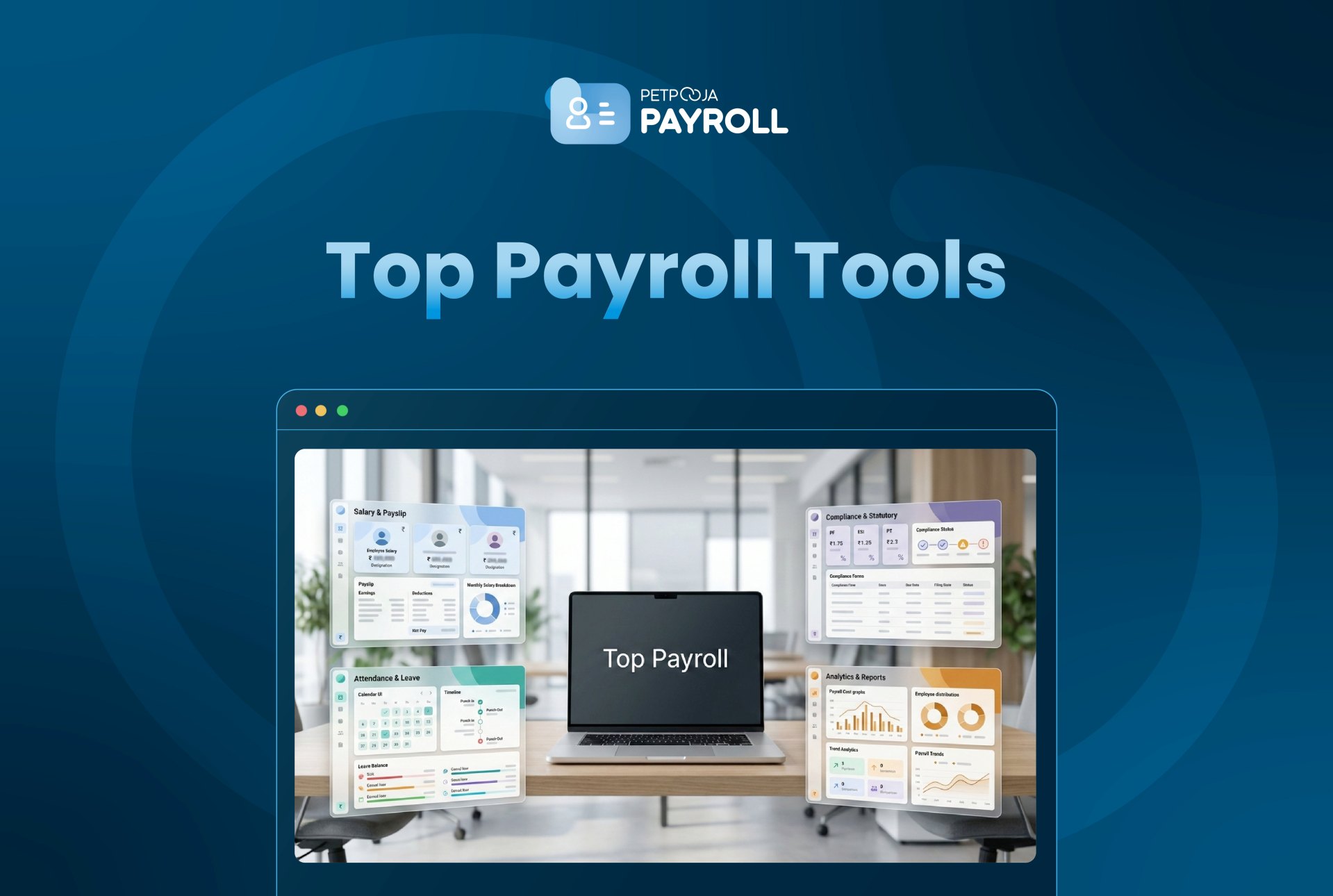





Manual payroll management is costing Indian small businesses thousands of rupees annually through errors, compliance penalties and wasted administrative time.
Over 40% of SMEs still rely on spreadsheets for payroll processing…a risky approach when one calculation error can trigger government fines.
This guide explores the top 10 payroll solutions specifically designed for Indian small businesses, comparing pricing, compliance features, and real-world use cases to help you choose the right tool for your growth stage.
Why Payroll Software Matters for Indian Small Businesses
Managing payroll in India isn’t just about calculating salaries. It’s a complex maze of regulatory requirements that changes frequently and varies by state. Here’s what small business owners face:
The Manual Payroll Problem:
- Calculating PF (12% from both employer and employee)
- Tracking ESI deductions (mandatory for 10+ employees earning under ₹21,000/month)
- Managing TDS with strict filing deadlines
- Handling state-specific Professional Tax (PT)
- Generating compliant payslips and Form 16
- Risk of ₹10,000+ in penalties per delayed filing
What Automation Solves:
- One-click payroll processing instead of hours of manual calculation
- Automatic compliance with TDS/PF/ESI/PT deductions
- Real-time alerts for compliance deadlines
- Mobile access for employees to download payslips instantly
- Audit-ready reports and digital document storage
- Estimated time savings: 5-20 hours per pay cycle
The shift from spreadsheets to automated systems is no longer optional …it’s becoming an industry standard
For SMEs with 50+ employees, fixed pricing can save ₹69,500+ annually compared to per-employee models charging ₹250/month per head.
Top 10 Payroll Software for Indian Small Businesses in 2026
1. Salarybox – Best for Startups & Lean Teams
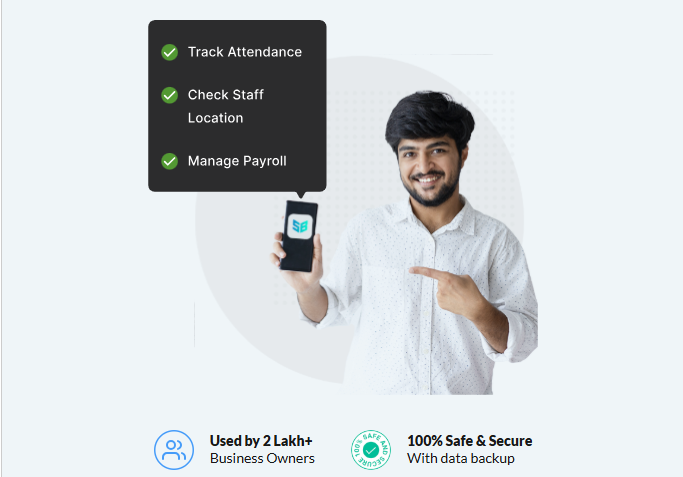
Ideal For: Teams of 10-50 employees, bootstrapped startups, cost-conscious SMEs
Pricing: ₹50/user/month (or custom annual plans)
Key Features:
- Cloud-based with instant access
- One-click payroll processing
- Automatic PF & ESI compliance
- Mobile app for employees (payslip downloads, leave tracking)
- Auto TDS deductions and form generation
- Attendance module with shift management
Pros:
- India-built, designed for local compliance from day one
- Affordable entry point
- Time-saving automation (users report 70%+ time reduction)
- Strong mobile experience
- 24/7 customer support
Cons:
- Advanced analytics are basic
- It can be complex when the employee count exceeds 100
- Limited customization for complex salary structures
Best Use Case: A 25-person design agency in Bangalore paying multiple salary structures. Salarybox’s one-click processing and mobile app mean the finance manager processes payroll in 30 minutes instead of a full day.
Customer Feedback: “It frees up time for strategic decisions,” per user reviews. Highly rated for speed and ease of use.
2. Zoho Payroll – Best for Ecosystem Integration

Ideal For: Businesses already using Zoho (Books, CRM, Desk), mid-market SMEs
Pricing: Free for up to 3 employees; ₹40-60/employee/month for paid tiers
Key Features:
- Seamless integration with Zoho Books (accounting)
- 40+ pre-built reports
- Modern, intuitive UI (minimal learning curve)
- Auto Form 16 generation
- Attendance & leave sync
- Multi-level approval workflows
Pros:
- Free tier for small teams
- Excellent UX compared to legacy systems
- Strong integration with Zoho ecosystem
- Responsive support team
- 1-month free trial with all features
Cons:
- Limited if you’re not using other Zoho products
- Per-employee pricing gets expensive at scale
- Customization limited for unique salary structures
Best Use Case: A 15-person content agency using Zoho Books for invoicing and Zoho CRM for clients. Zoho Payroll connects directly to Books, auto-syncing salary expenses for accurate financial reporting.
Customer Feedback: “Switching from ADP to Zoho Payroll has been a game-changer. The struggle of uploading Excel files is gone. We’ve saved 110+ hours annually on payroll admin alone.”
3. GreytHR – Best for Comprehensive HR + Payroll
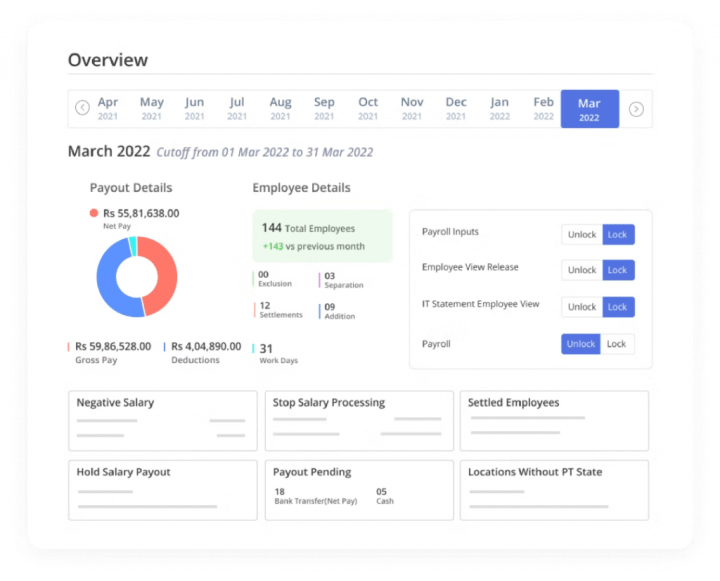
Ideal For: Growing SMEs (50-250 employees) needing full-suite HR management
Pricing: ₹3,495-7,495/month (plans for up to 100 employees, ₹35 per additional employee)
Key Features:
- Core HR (employee database, documents, workflow automation)
- Advanced payroll with custom salary components
- Reimbursement and expense management
- Leave and attendance tracking
- Performance management module
- Employee self-service portal
Pros:
- 25+ years of HR industry experience
- Highly customizable workflows
- Comprehensive feature set (HR + Payroll in one)
- Suitable for startups through enterprises
Cons:
- Expensive for early-stage startups
- Limited free plan (25 employees only, no team additions)
- Steep upgrade costs to unlock features
- Complex pricing structure
Best Use Case: A 120-person manufacturing SME needing to track employee performance, manage multiple salary structures, and handle complex leave policies. GreytHR’s workflow automation handles all of this in one platform.
4. Keka – Best for Modern HR with Flexi-Benefits
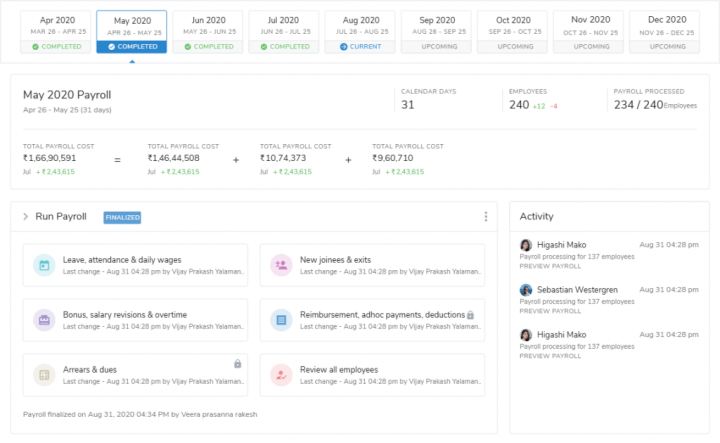
Ideal For: Innovation-focused SMEs, businesses with flexible compensation needs
Pricing: ₹60-150/user/month (₹5,495-15,999/month for up to 100 employees)
Key Features:
- Flexi-benefits framework
- Overtime and shift automation
- Performance management integration
- Intuitive mobile app
- Customizable leave policies
- Real-time dashboard insights
Pros:
- Clean, modern UI
- Flexible benefit structures (emerging benefit type in India)
- Good automation of leave and overtime rules
- Mobile-first approach
Cons:
- Higher pricing than competitors
- Some niche features may need adjustments
- Less suitable for very traditional businesses
Best Use Case: A 75-person fintech startup offering flexible work-from-home options and variable bonus structures. Keka’s flexi-benefits module aligns with startup compensation trends.
5. Petpooja Payroll Best for Multi-Outlet & Restaurant Businesses
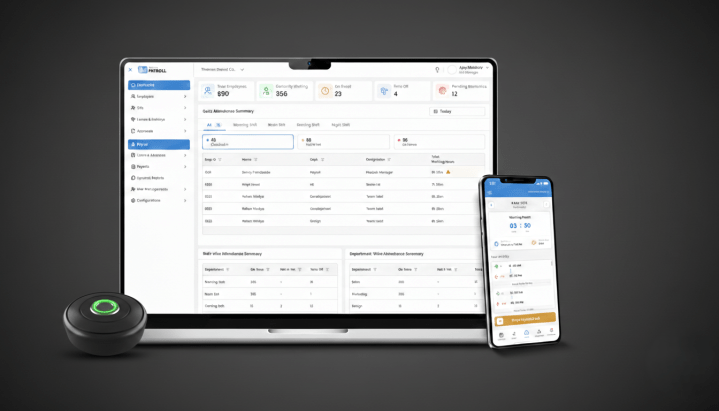
Ideal For: Restaurant chains, retail outlets, multi-location SMEs (50+ employees), businesses with biometric attendance
Pricing: ₹8,000 + GST first year, ₹4000 + GST annual renewal (fixed pricing, no per-employee fees)
Key Features:
- Fixed annual cost regardless of employee count
- Biometric integration (fingerprint, facial recognition, NFC cards)
- Multi-outlet management with a consolidated dashboard
- POS integration (for restaurants)
- Attendance regularisation via mobile app
- Over 25,000+ SME users across India
- Owner and employee mobile apps
- Automated PF/ESI/TDS compliance
Pros:
- 96-97% cost savings after Year 1 compared to per-employee models
- Unlimited employees included (no per-employee charges)
- Biometric accuracy eliminates manual errors
- Restaurant industry expertise
- Scalable multi-outlet management
- Transparent, predictable pricing
Cons:
- Limited integrations – No open API, limited third-party integration capabilities
- Industry-specific limitations – Best for restaurants/retail only, not suitable for professional services or pure HR needs, lacks comprehensive HRMS functionality
Best Use Case: A 200-employee multi-speciality hospital with 3 branches across Ahmedabad wants to move away from per-employee payroll pricing and expensive biometric hardware contracts.
Instead of paying 200 × ₹200/month = ₹4,80,000 annually in per-employee fees plus ₹40,000-₹60,000 for biometric devices, the hospital pays ₹7,000 + GST in Year 1 and ₹4000 + GST from Year 2 onwards with
Petpooja’s fixed-cost payroll and free hardware bundle…bringing software and hardware costs under ₹10,000 per year while supporting unlimited employees.
6. RazorpayX Payroll – Best for Fintech Integration & Contractors
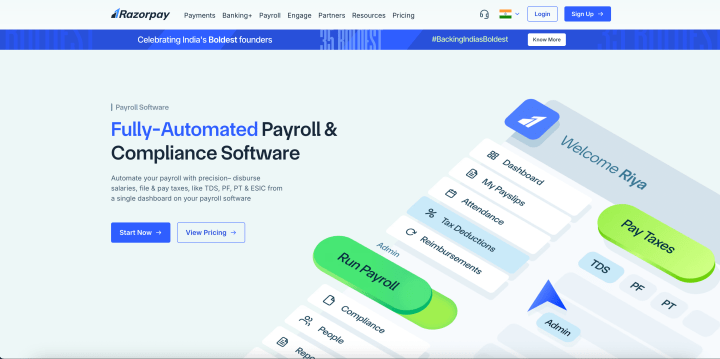
Ideal For: Tech startups, businesses with contractor payments, fintech ecosystem users
Pricing: ₹30/user/month (most affordable per-employee option)
Key Features:
- Automated salary transfers to employee bank accounts
- Contractor and freelancer payment management
- Seamless attendance sync (integrates with Ubitech, Jibble)
- Compliance filing (TDS, PF, PT, ESIC)
- WhatsApp integration for payslip delivery
- Real-time analytics dashboard
Pros:
- Lowest per-employee pricing in the market
- Fintech-backed (Razorpay’s ecosystem integration)
- Fast payouts and contractor management
- Startup-friendly approach
- API-first integration
Cons:
- Limited comprehensive HR features
- Focuses primarily on payroll/payments
- Less suitable for complex HR workflows
Best Use Case: A 40-person tech startup with 15 contractors and varying project payments. RazorpayX’s contractor module automates contractor TDS filing, while ₹30/employee pricing keeps costs lean.
7. Craze HR – Best for Modular Flexibility

Ideal For: Growing startups that want to add features as they scale
Pricing: ₹60/user/month (Core HR base) + optional modules (Payroll, Leave, Attendance, Performance)
Key Features:
- Modular architecture (pay only for what you use)
- Real-time sync between attendance, leave, and payroll
- Unified employee database
- Automated onboarding and offboarding
- No feature gating or plan upgrades required
- Full suite access from day one
Pros:
- Transparent, predictable pricing
- No minimum headcount requirement
- Automatic sync eliminates data silos
- Simple and scalable
- Full feature access from launch
Cons:
- Newer platform (limited long-term case studies)
- Smaller customer base vs. established players
- May lack some niche integrations
Best Use Case: A 30-person design studio starting with Core HR (employee management) and adding Payroll and Attendance modules in month 2. Craze’s modular approach means no overpaying for unused features.
8. FactoHR – Best for Time-Saving with Robust Reporting

Ideal For: Operational SMEs focused on reporting and efficiency
Pricing: ₹60/user/month
Key Features:
- Automated statutory filing (PF, ESI, TDS)
- Comprehensive reimbursement management
- Insightful HR and payroll dashboards
- Cloud-based with automatic updates
- Employee self-service portal
- Customizable reports
Pros:
- Strong reporting capabilities
- Handles complex reimbursement scenarios
- Cloud updates keep compliance current
- Good time-saving automation
Cons:
- Less detailed information is available publicly
- May lack cutting-edge UI/UX
- Limited integration options
Best Use Case: A 60-person BPO managing multiple salary structures and frequent reimbursements. FactoHR’s reimbursement module and reporting save hours on finance reconciliation.
9. Quikchex – Best for Established, Multi-Geography Businesses
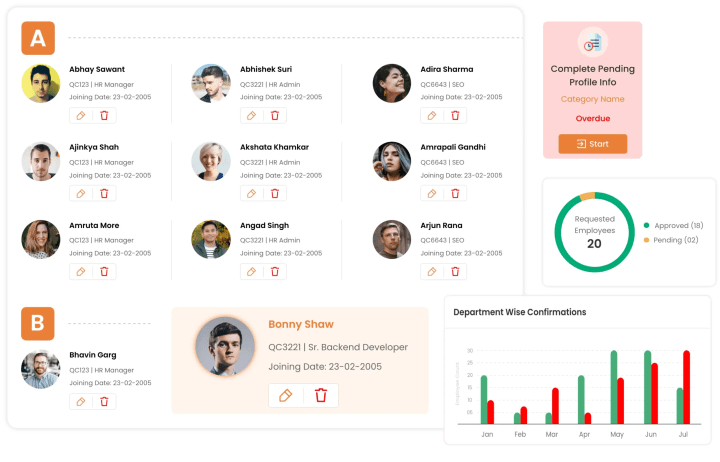
Ideal For: Growing SMEs with multiple locations, enterprises and businesses expanding internationally
Pricing: Custom pricing (varies by size and features)
Key Features:
- 1,200+ active clients across India
- HRMS + Payroll outsourcing services
- Investment proof (POI) verification workflows
- Form 16 auto-generation
- Employee self-service portal
- Multi-country support (India, Singapore, the Middle East)
- 40+ years of industry experience
Pros:
- Proven, established player
- Multi-geography compliance expertise
- Comprehensive feature set
- Professional implementation and support
Cons:
- Custom pricing (not transparent)
- May be overkill for early-stage startups
- Larger implementation timeline
Best Use Case: A 150-person retail chain operating in 5 Indian states plus one location in the UAE. Quikchex’s multi-geography expertise and statutory filing automation simplify compliance across jurisdictions.
10. Pagarbook– Best for Beginner-Friendly Cloud Payroll
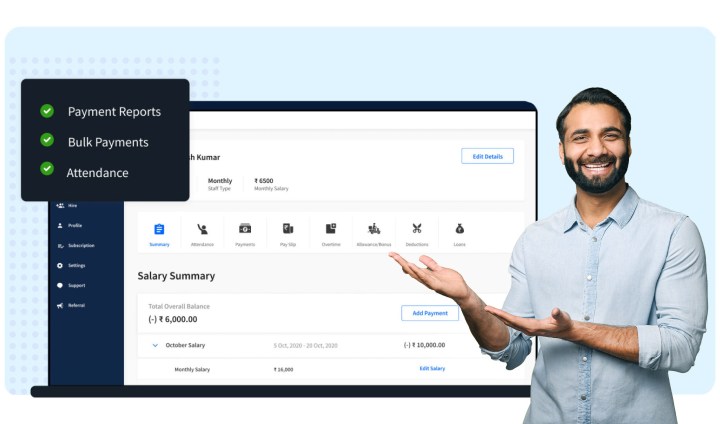
Ideal For: First-time payroll software users, tech startups, teams under 50
Pricing: Custom pricing (India-focused startup model)
Key Features:
- Cloud-based payroll
- Indian tax compliance built in
- Simple, beginner-friendly interface
- Automated payroll processing
- Mobile access for employees
- Quick onboarding (live in days, not weeks)
Pros:
- India-first design philosophy
- Simple to learn (no steep learning curve)
- Fast implementation
- Tech startup ecosystem alignment
Cons:
- Limited scalability information is publicly available
- Smaller customer base
- May lack enterprise features
Best Use Case: A 22-person SaaS startup that just hired its first 10 employees and needs a quick payroll setup. Pagarbook fast onboarding gets them live within 48 hours.
Conclusion
Manual payroll management is a time bomb for Indian SMEs. Between compliance complexity, calculation errors, and the sheer administrative burden, the cost of doing payroll manually far exceeds the investment in quality software.
The 10 solutions in this guide cover every business size and budget, from bootstrapped startups to scaling enterprises.
The right payroll software doesn’t just save time; it eliminates compliance risk, improves employee satisfaction through faster payslip delivery, and frees your team to focus on business growth instead of spreadsheet battles.
Your next step: Request trials from 2-3 solutions that match your business profile (use the selection guide above). Spend 30 minutes testing each with your actual data. The 30 minutes of testing today will save 100+ hours of payroll headaches this year.
Frequently Asked Questions
Yes. Solutions like Zoho Payroll (free tier for 3 employees) and RazorpayX Payroll are designed for lean teams. However, if you have fewer than 10 employees, some solutions might be overkill…spreadsheets may suffice until you grow. But shifting early means fewer compliance risks and less rework during scaling.
A: Tools like GreytHR and Keka allow custom salary components. If your business has unique requirements (performance-linked pay, complex deductions), test the software’s customization depth during the trial before committing.
Yes, but best practice is to switch during month-end or quarter-end to simplify reconciliation. Ensure your new software can import historical payroll data and continue generating compliant payslips.
Depends on the software. Petpooja includes biometric support and can integrate with your existing devices. Most other solutions integrate with third-party biometric systems.
Top-tier vendors update compliance rules quarterly or after government announcements. Always confirm the vendor’s update frequency during your sales call.
Yes. All top solutions use enterprise-grade encryption, role-based access controls, and comply with data protection regulations.